
Pack cotton and linen tops—they breathe better than polyester when Croatia’s heat hits.
Grab sturdy shoes with thick cushioning and deep treads for cobblestone streets, plus water sandals for rocky beaches.
Bring a lightweight cardigan or scarf since evenings cool down fast.
You’ll need long sleeves or pants to cover shoulders and knees at churches, so layer thin pieces you can mix and match.
Neutral colors keep outfits simple, and rotating your shoes prevents blisters across different terrain.
Each piece I’ve tested tackles multiple climate challenges, so you’ll stay comfortable and respectful throughout your trip—details on how to coordinate everything follow below.
Choose Breathable Fabrics for Croatia’s Heat and Humidity
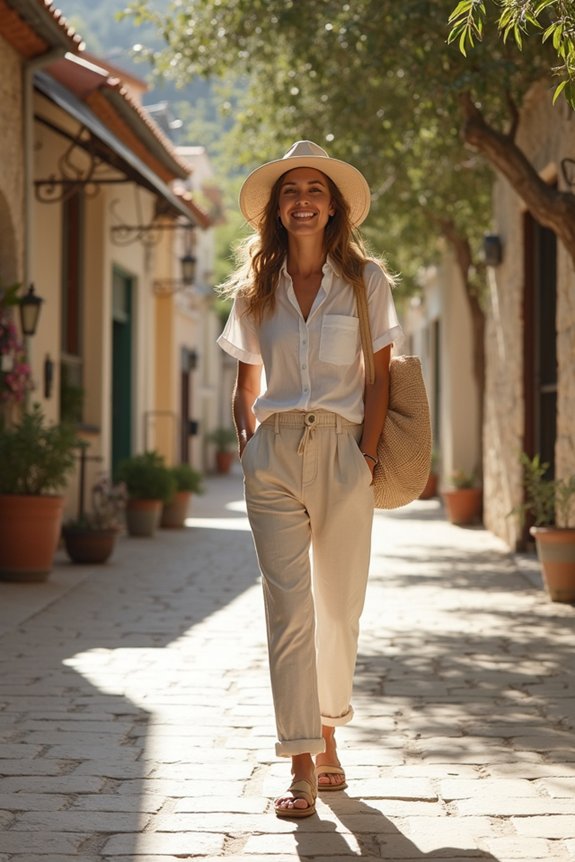
When you’re packing for Croatia’s coast, where summer temperatures climb to 28–34°C (82–93°F), what you wear affects how comfortable you’ll feel during the day. Cotton and linen outperform polyester in this heat and humidity. These breathable fabrics allow air to move through, keeping you cooler when you’re exploring or relaxing by the water.
Pack lightweight pants and breathable tops like tank tops or short-sleeve tees. Linen shirts work well—they’re loose enough for airflow and appropriate for dinners out. Pair them with lightweight pants for breezy outfits suited to Croatia’s coastal climate. Layering thin, breathable pieces helps you adjust between hot days and cooler evenings, so you’re prepared for whatever the weather brings.
Layer Pieces for Evening Cool-Downs and Climate Shifts
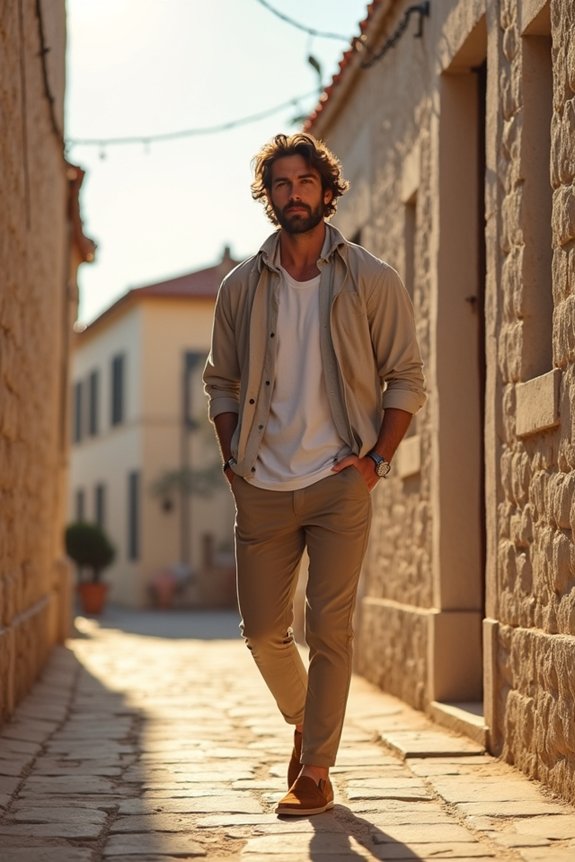
How do you stay comfortable when Croatia’s coast shifts from scorching afternoon heat to cool evenings? A solid layering approach works well. I pack lightweight layering pieces like a knit cardigan or a compact shirt jacket—they’re useful for climate shifts. During June and September, evenings get chilly, and I’ve found that draping a cardigan wrap over my dresses and pants keeps me warm. A portable outer layer doesn’t take up much luggage space, either. I always bring at least one long-sleeve top for shoulder coverage in churches, and it doubles as evening protection. This strategy lets me sightsee comfortably in afternoon heat, then provides warmth when temperatures drop after sunset.
Invest in Supportive Shoes Built for Cobblestones and Stairs
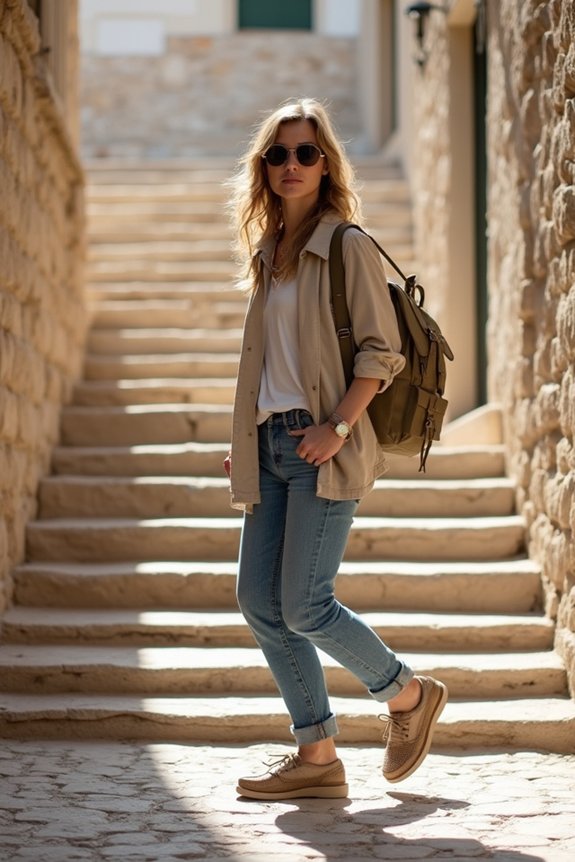
I’ve learned that Croatia’s cobblestone streets and steep stairs demand shoes with real ankle support and thick cushioning—I wore flat sandals on my first trip and my feet ached by noon, but switching to hiking-style sneakers with memory foam insoles made a real difference. You’ll want footwear with deep treads and grippy rubber soles because those ancient stones get slippery when wet, and the uneven surfaces can twist your ankle if your shoe doesn’t provide lateral support. Look for breathable mesh uppers so your feet don’t overheat during long sightseeing days, and choose shoes you’ve already broken in rather than new pairs that’ll give you blisters.
Cobblestone Navigation Essentials
Your feet will thank you if you invest in shoes specifically designed for uneven terrain, because Croatia’s historic towns aren’t exactly flat or smooth. I’ve learned that cobblestones demand serious grip and ankle support, so I always pack walking shoes with cushioned footbeds that actually protect during long days exploring narrow streets.
Sneakers work well for daytime wandering, while leather boots offer evening versatility without sacrificing comfort. For pebbly beaches and rocky shorelines, water shoes with secure straps keep you stable on slippery surfaces.
Here’s what I’ve discovered: rotating your footwear matters more than you’d think. Wedge espadrilles give you dressy options without wobbling on uneven ground, while supportive sandals handle boat trips smoothly. This rotation approach prevents blisters and keeps your feet comfortable throughout your Croatian adventure.
Stair-Climbing Shoe Features
When you’re tackling Dubrovnik’s endless stone steps or navigating Split’s steep alleyways, the right shoes matter for maintaining comfort throughout your day.
I’ve learned that investing in proper footwear improves how you explore Croatia’s demanding terrain. Here’s what I look for:
- Cushioned footbeds with arch support – These reduce fatigue on hillier routes and uneven surfaces, keeping your feet comfortable through long days of stair-climbing.
- Slip-resistant, stable soles – Quality grip handles wet cobblestones and steep passages safely, preventing slips on slippery streets.
- Secure straps or laces – Land-ready sneakers with adjustable closures keep your feet locked in place on stairs, preventing shifting that causes blisters.
I rotate between sturdy walking shoes for daily exploration and dressier options for evenings, maintaining foot support wherever I venture.
All-Day Comfort Durability
How much walking do you actually do in a day when you’re exploring Croatia’s old towns? I’ve discovered that investing in sturdy footwear with cushioned footbeds helps during long days sightseeing. I rotate my walking shoes throughout my trip—alternating between two pairs prevents excessive wear and keeps my feet fresher.
Good grip matters on cobblestones and uneven surfaces, particularly when navigating coastal boardwalks. I’ve found that lightweight sneakers with supportive insoles handle Plitvice boardwalks well, while leather boots work equally well for steep city streets. The cushioned footwear reduces fatigue, and alternating styles allows each pair to recover between wears.
This footwear rotation strategy is practical and beneficial for maintaining all-day comfort when you’re tackling both villages and nature trails.
Select the Right Footwear for Pebble Beaches and Rocky Shores
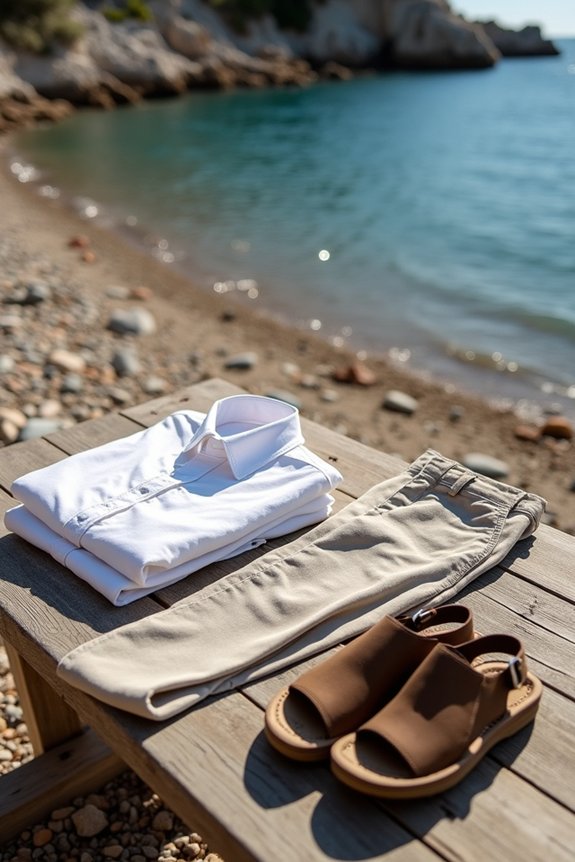
Croatia’s coastline demands footwear that can handle both water and stone, so picking the right shoes matters more than you’d think. I’ve learned this lesson the hard way while exploring pebble beaches and rocky shores across the islands.
Here’s what I recommend for your Croatia travel wardrobe:
- Waterproof sandals – These protect your feet from sharp rocks while letting water drain quickly, keeping you comfortable during beach days.
- Reef or water shoes – I wear these for serious traction on slippery surfaces, and they’re necessary when navigating rocky terrain alongside the coast.
- Rotating footwear – Alternate between walking shoes and water sandals to prevent blisters and give your feet recovery time.
Your feet will thank you when you’re moving between cobblestones and sandy shores without pain or frustration holding you back.
Pack a Light Jacket for Evenings and Unexpected Rain
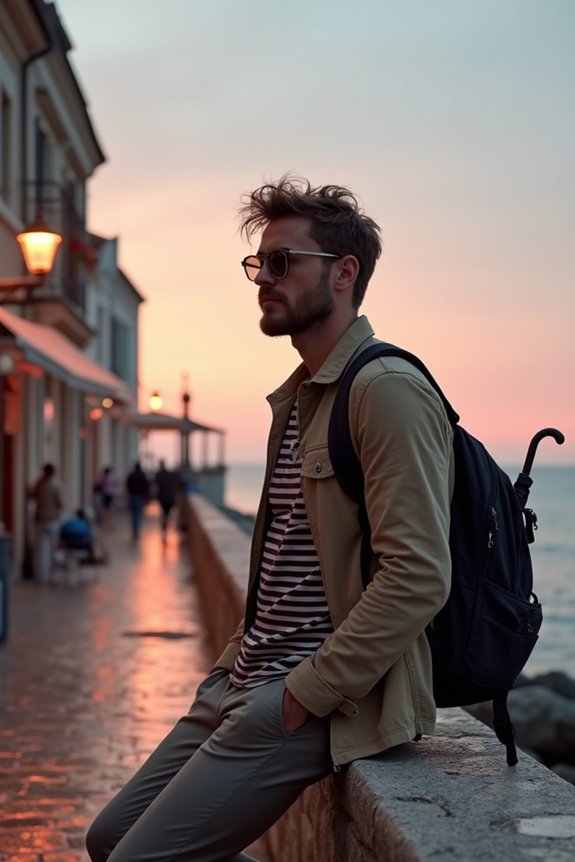
Why do so many travelers arrive in Croatia unprepared for the temperature swings between day and night? I’ve learned that packing a light jacket is necessary for Croatia travel. During June and September evenings, temperatures drop considerably, and I’ve found myself grateful for a cardigan or knit blazer when outdoor activities wind down. Coastal towns particularly demand this layering strategy—ocean breezes create chilly conditions despite hot daytime weather. Beyond evenings, I’ve discovered that public indoor spaces often run weak AC, so my jacket stays useful inside hotels and museums. A lightweight shirt jacket packs compactly in my wardrobe and pairs with multiple outfits, making it practical for unpredictable rain showers. This simple addition improves my packing approach and keeps me comfortable throughout variable coastal and inland weather.
Dress Modestly When Visiting Religious Sites in Croatia
When you’re exploring Croatia’s churches and religious sites, cover your shoulders and knees out of respect for these sacred spaces, even when the summer heat makes you want to wear less. You can pack lightweight options like linen pants or midi skirts paired with breathable tops that reach past your shoulders, or throw a thin cotton scarf or cardigan over sleeveless dresses when you arrive at a church. Keeping a compact shawl in your day bag solves this problem without adding bulk, since the dress code is important to locals and is worth accommodating for the warm weather.
Coverage Requirements for Churches
How’d you pack for visiting a sacred space without totally changing your whole travel wardrobe?
I’ve found that covering shoulders and knees at Croatian churches doesn’t require overhauling your suitcase. The dress code for religious sites is straightforward, and lightweight layers do the job perfectly.
Here’s what I bring for church etiquette:
- A linen scarf that folds small but covers shoulders completely
- A fitted cardigan or overshirt that pairs with any outfit
- Lightweight pants or a knee-length skirt for modesty guidelines
Short sleeveless tops and bare midriffs aren’t appropriate inside sacred spaces, so I plan outfits that transition easily. A scarf, shawl, or overshirt takes minimal luggage space yet respects local expectations for day trips to churches. These pieces align with mainstream European modesty standards while keeping your Croatia clothing practical and versatile.
Respectful Attire Guidelines
Respectful dress at Croatian churches means covering your shoulders and knees, and this requirement is straightforward to meet. Layering allows you to create appropriate religious site attire while maintaining comfort and practicality.
| Item | Purpose | Examples |
|---|---|---|
| Shawl | Shoulder coverage | Lightweight cotton, linen |
| Cardigan | Layered warmth | Fitted, knee-length styles |
| Scarf | Quick covering | Oversized, versatile fabrics |
| Pants | Knee protection | Lightweight, breathable options |
In Croatia, modesty norms reflect local standards and understated elegance. Packing a thin cardigan or shawl that coordinates with multiple outfits keeps you prepared for any church visit. This approach allows you to explore religious sites respectfully while remaining practical and comfortable throughout your travels.
Blend Casual Comfort With Stylish Practicality: What Croatians Expect
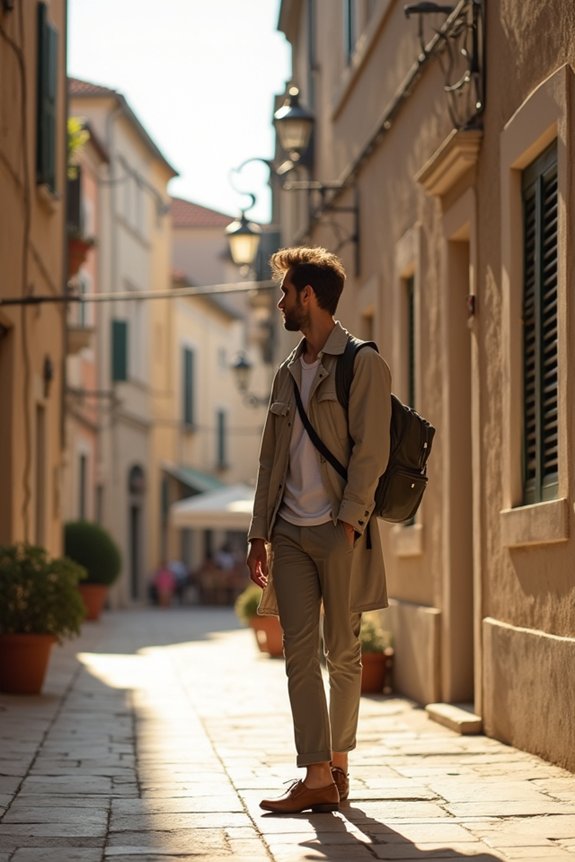
Why do so many travelers stick out in Croatia’s charming streets? They’re often overdressed or underdressed, missing that balance locals achieve naturally. Here’s what I’ve learned blending in:
- Choose breathable fabrics like linen and cotton over polyester—they’re necessary for coastal heat while keeping you neat rather than sweaty.
- Build outfits in neutral tones with versatile pieces you can layer; this approach lets you transition from daytime sightseeing to evening dinners without overpacking.
- Invest in sturdy footwear that handles cobblestone streets comfortably—I’ve tested countless shoes, and practical walking shoes outperform trendy options every time.
Add sun protection through a hat and sunglasses, then pack a lightweight wrap for cooler evenings. Croatians appreciate when visitors respect their aesthetic: neat yet comfortable, never casual American-style.