Austin’s wild weather swings demand ten core pieces that actually work together. I build everything around worn-in jeans, a leather jacket, and breathable layers—white tees, cashmere sweaters, silk tanks—that handle 55-degree mornings and 80-degree afternoons.
Add comfortable walking shoes, a packable rain shell, and an 8-by-10-inch crossbody bag with anti-theft zippers for hands-free exploring. Finish with a wide-brim hat, sunglasses, and a structured belt. These pieces transition smoothly from downtown coffee runs to live music venues without switching bags or rewearing items.
The Worn-In Jeans That Work Every Season
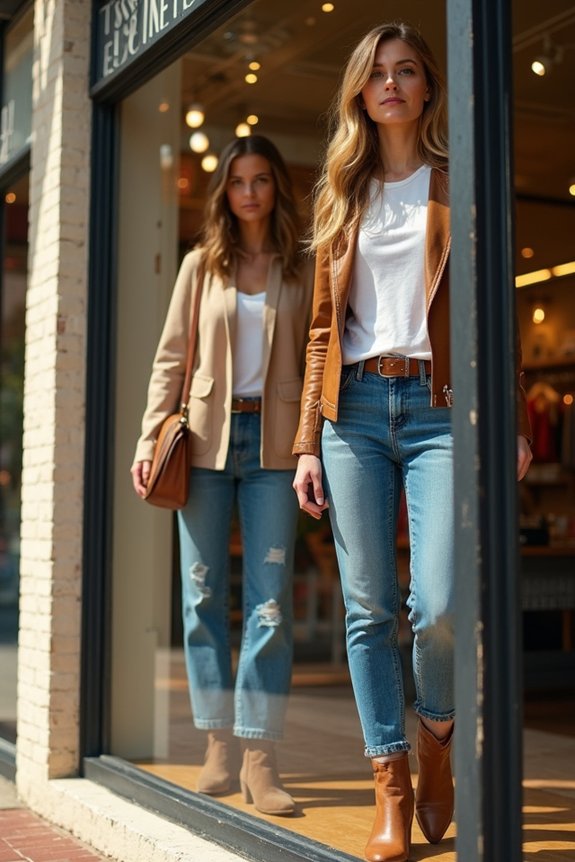
Because Austin’s weather swings from 50°F mornings to 100°F afternoons, you’ll want denim jeans that actually work with those changes instead of against them. I’ve found that broken-in jeans with a comfortable fit become your go-to for day-to-night transitions. They’re not too stiff, so you can layer them with versatile pieces like lightweight knits or cotton tees without feeling restricted. The appeal of worn denim is that it adapts to your lifestyle—whether you’re exploring downtown or hitting live music venues. I reach for mine constantly because they pair well with everything from sneakers to ankle boots. That’s the real value: one pair of quality denim that earns its spot in your rotation year-round, no matter what Austin’s temperature throws at you.
A Leather Jacket for Instant Warmth and Style
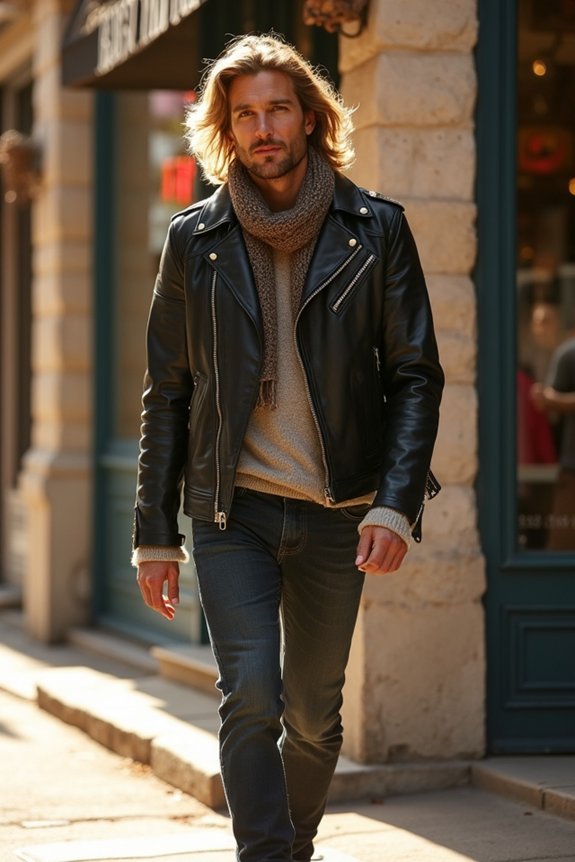
While your worn-in jeans handle the temperature swings, you’ll need a layer that works just as hard without taking up much space in your closet. A leather jacket does exactly that. It’s packable, durable, and versatile across Austin’s unpredictable seasons. I reach for mine constantly—layering it over moisture-wicking tops during cool evenings or throwing it over knits when temperatures dip unexpectedly. The textural contrast adds depth to neutral palettes like denim blue and charcoal, moving casual outfits into smart-casual territory. Pair it with a belt, bandana, and lugsole loafers, and you’ve got multiple outfit combinations without needing extra pieces. It’s the one investment piece that actually earns its space in your rotation, working harder than you’d expect year-round.
T-Shirts and Tanks: Your Year-Round Layering Foundation
How do you build a wardrobe that works in Austin’s heat one day and cool nights the next? I’ve found that breathable fabrics and moisture-wicking materials form my foundation. A knit tank, white tee, cashmere tee, cashmere sweater, and silk tank give me options for layering without bulk.
These pieces handle sudden weather shifts because they’re designed for active days around the city. The white tee works solo when it’s scorching, yet layers easily under my leather jacket when evenings cool down. I reach for the cashmere sweater during winter months, and the silk tank adds sophistication for nightlife without taking up extra packing space.
Quick-dry fabrics matter when you’re exploring Austin’s humidity. I pair these tops with one pair of jeans and add belts, necklaces, or earrings to transform basic pieces into day-to-night outfits.
Lightweight Sweaters for Morning Chill and Evening Transitions
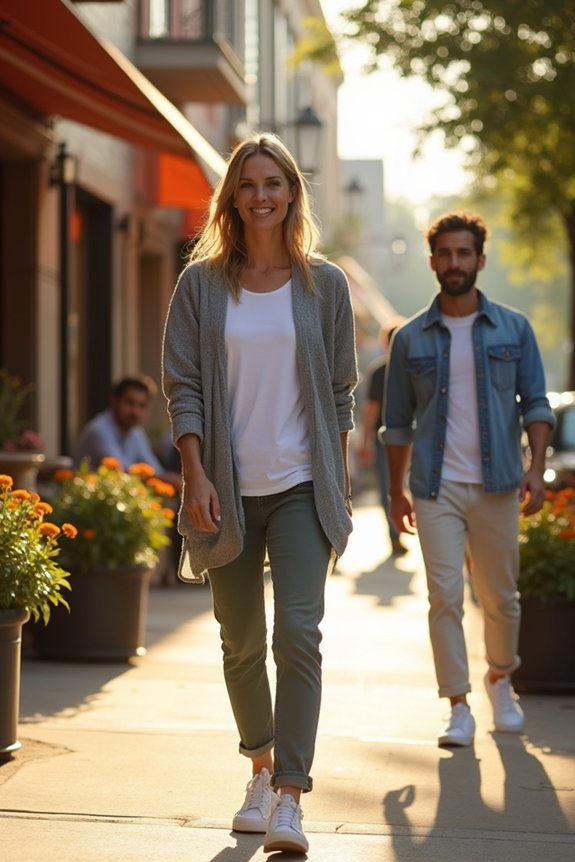
You’ll notice Austin’s temperature swings most during shoulder seasons—spring and fall—when mornings sit around 55–60°F and afternoons climb into the 80s. Lightweight sweaters become your practical solution for handling these shifts without overheating.
I’ve found that fine-gauge cashmere or merino blends work best because they’re warm without bulk and dry quickly after sweat or rain. Look for compressible knits you can easily pack into a small bag, so you’re ready when that morning chill hits.
Neutral tones like charcoal, beige, and olive pair well with everything in your rotation. Layer them over breathable cotton or linen tops, or wear one under a leather jacket for refined transitional looks. This layering approach keeps you comfortable throughout Austin’s unpredictable days.
Comfortable Walking Shoes Built for All-Day Austin Exploring
Once you’ve got your layers sorted, what really matters is having shoes that won’t leave your feet aching after hours of wandering through downtown and the Trail of Lights. I’ve learned that all-day comfort comes from picking walking shoes designed for actual distance, not just style. Loafers and comfortable sneakers become your best friends, especially when you’re exploring neighborhoods on foot. Look for breathable materials that won’t trap heat during warm afternoons, and cushioned soles that support you from morning through evening. I rotate between a leather loafer for casual outings and a supportive sneaker for longer days, and both pair well with Austin’s neutral palette. The right walking shoes let you focus on discovering the city rather than your sore feet.
A Packable Rain Shell for Sudden Texas Storms
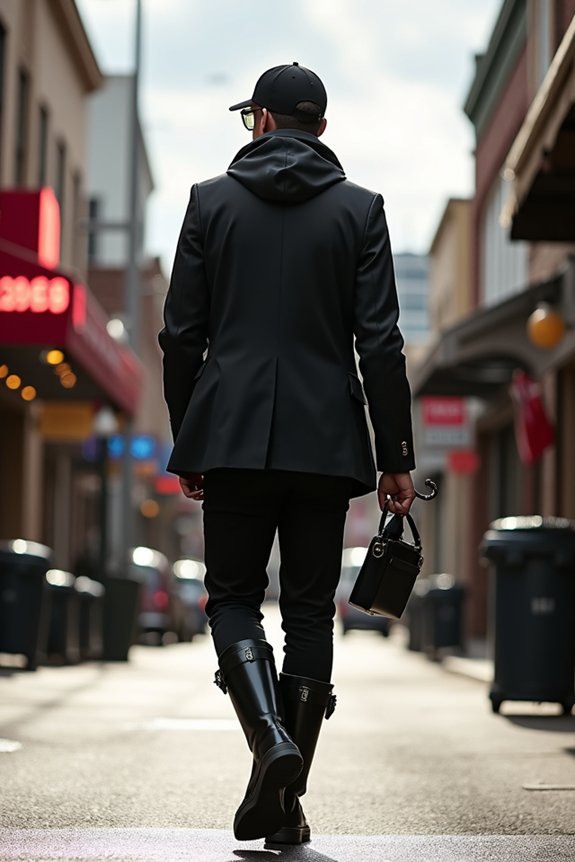
I’ve learned that Austin’s unpredictable spring and fall storms demand a rain shell you’ll actually carry, so I prioritize packable features like a stuff pocket and compact fit that doesn’t bulk up my daypack. You want something thin and lightweight—think 2-3 ounces—that layers smoothly over a moisture-wicking tee without creating that stiff, claustrophobic feeling, plus cuffed wrists that seal out water when you’re caught off-guard. The right shell keeps you dry during a sudden downpour instead of derailing your weekend plans, which is why I’ve tested dozens before finding what works for Austin’s variable weather.
Why Rain Shells Matter
How often does Austin’s weather shift from sunny to stormy in a single afternoon? I’ve learned the answer firsthand: constantly. That’s why I always carry a packable rain shell in my daypack.
Here’s what makes them essential:
- Lightweight compression – A quality shell stuffs into a fist-sized pouch, weighing mere ounces, so it doesn’t burden your bag during dry spells
- Water-resistant protection – DWR-coated fabrics repel drizzle and moderate downpours without feeling heavy or restrictive
- Breathability – You won’t overheat while exploring crowded venues or footpaths when temperatures spike between rain showers
I’ve tested mine through countless Austin weather swings. The fabric dries quickly when paired with moisture-wicking layers underneath. Unlike bulky rain jackets that consume backpack space, this compact shell keeps me mobile and prepared. It’s a practical investment for year-round exploring here.
Spring And Fall Storms
When spring rolls around in Austin, you’ll notice the sky can flip from clear blue to dark gray within minutes, and that’s when a packable rain shell becomes useful. I’ve learned this lesson the hard way during unpredictable spring and fall storms that catch everyone off guard.
A quality packable rain shell weighs almost nothing, yet it shields you completely from sudden downpours. I stuff mine into my daypack’s side pocket, taking up barely any space. The lightweight fabric layers perfectly over moisture-wicking tops without creating bulk, so you won’t overheat during warm spells.
Look for shells with adjustable cuffs and a hood—these details seal out rain while keeping you comfortable during long city walks. You’re investing in versatility and practical protection, which matters when weather shifts constantly.
Packable Features To Prioritize
Any shell worth buying needs to pack down smaller than a water bottle, and that’s where fabric weight becomes your first consideration. I’ve tested shells that promised packability but still bulged awkwardly in my daypack, so I learned to prioritize specific features:
- Nylon ripstop fabric under 3 ounces that compresses without creasing
- Taped seams that prevent water seepage during sudden downpours
- Built-in stuff sack or zippered pocket for compact storage
Pairing your packable rain shell with lightweight layers gives you flexibility when Austin’s weather shifts unexpectedly. The shell’s adjustable hood and cuffed sleeves seal out wind effectively while you’re exploring festivals or hiking. Neutral colors like charcoal or navy coordinate well with denim and leather pieces you already own, making this one investment work across multiple outfits.
A Crossbody Bag That Bridges Daytime and Nightlife
I’ve found that a structured crossbody bag—around 8 by 10 inches with anti-theft zippers—works well whether I’m walking through South Congress in the morning or heading to dinner on 6th Street at night. The key is choosing a neutral leather or nylon style that pairs with both my casual denim-and-tee looks and dressier evening outfits, plus it keeps my phone, ID, cards, and SPF accessible without fumbling through a larger bag. What makes this piece practical is how slim it folds flat enough to pack inside my weekend backpack, which matters when I’m bouncing between multiple venues across Austin.
Daytime Exploration Versatility
How do you carry your essentials while keeping both hands free to snap photos or grab a coffee? A crossbody bag solves this daytime challenge perfectly. I’ve tested countless styles exploring Austin’s neighborhoods, and here’s what actually works:
- Compact design holds your phone, wallet, sunscreen, and water bottle without bulk
- Lockable zippers protect your stuff in crowded venues and markets
- Lightweight, durable nylon or leather resists Austin’s intense sun and occasional rain
Pair your crossbody with a lightweight jacket for layering during temperature swings. The neutral tone works equally well with jeans and a tee during morning walks or transitions seamlessly under a dress for evening plans. This bag lets you explore freely without worrying about your belongings.
Evening Transition Capability
That same crossbody bag you’ve been wearing all day works just as well when the sun sets, and here’s why: the trick isn’t switching bags—it’s choosing one that looks refined enough for evening venues while staying practical for real life. Look for locking zippers and adjustable straps so you can wear it comfortably over a knit tank or cropped tee without bulk. Interior pockets keep your wallet, phone, and charger organized and accessible during the evening transition from downtown patios to live music venues. A lightweight, structured bag in black, olive, or denim won’t exceed venue size limits, yet it holds everything you need. Pair minimal jewelry with clean lines, and you’re ready—same bag, completely different vibe.
Functional Design Features
Your crossbody bag’s real power isn’t just how it looks—it’s what happens when you actually use it all day and night in Austin’s heat and humidity. I’ve tested bags through scorching afternoons and packed venues, and the ones that last combine smart features with practical materials.
Look for these functional essentials:
- Anti-theft protection with RFID-blocking technology and lockable zippers that keep pickpockets out of crowded markets and bars
- Lightweight, durable materials like napa leather or weather-resistant nylon that handle sweat, sudden showers, and constant movement
- Compact sizing that fits your phone, wallet, sunscreen, and a light layer without weighing you down
The best crossbody fits everything you need without excess bulk. I’ve found that genuine anti-theft features matter most when you’re moving between venues, letting you focus on your night instead of worrying about your stuff.
Wide-Brim Hat and Sunglasses for Year-Round Sun
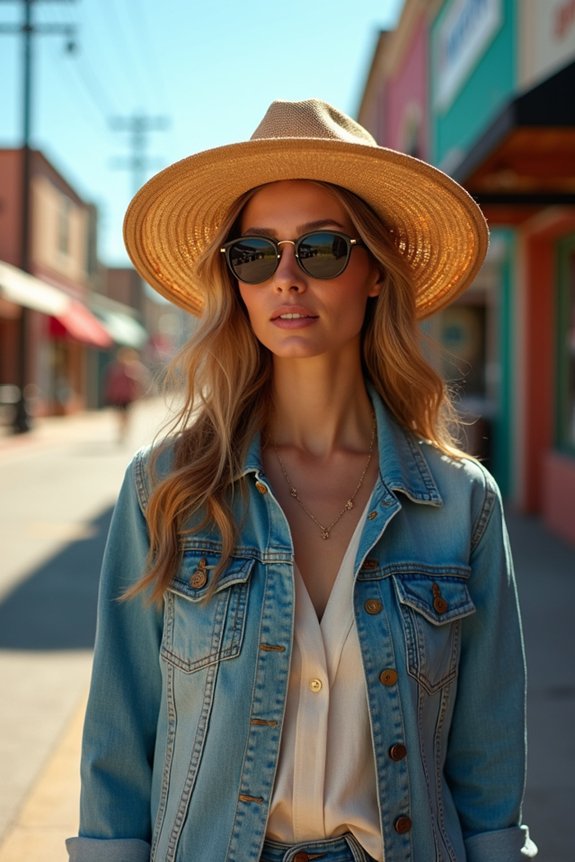
When you’re spending time outdoors in Austin, a wide-brim hat and UV-blocking sunglasses work together as your best defense against the intense Texas sun. A quality wide-brim hat with at least three inches of coverage all around keeps my face and neck protected, and the breathable fabric prevents overheating during our hot months. Pairing it with UV-protection sunglasses shields your eyes from harmful glare that bounces off pavement and water year-round.
I choose neutral tones—tan, black, or navy—so these pieces coordinate easily with my existing wardrobe. The hat packs flat for travel, and the sunglasses slip into any bag. Together, they provide practical sun protection while maintaining a cohesive appearance, no matter the season.
A Structured Leather Belt to Define and Elevate
A structured leather belt around 1.25 to 1.5 inches wide works with how your casual outfits look, and you’ll find it pairs just as well with a tucked tee as it does with evening trousers. The right belt—I’ve tested this with black and deep brown leather across cotton, denim, and silk pieces—defines your waist and brings your whole look together without taking up extra packing space. You’ll want one with a simple buckle and quality leather that resists creasing, because after months of rolling it in my bag while traveling through Austin’s heat, it still looks sharp and ready to wear.
Versatility Across Casual Outfits
How’d I never notice the difference a good belt makes? A structured leather belt adds definition to my casual outfits in ways I didn’t expect. I’ve found it works best when I’m building day-to-night looks, and here’s what I reach for most:
- White tee, black denim, and my black leather belt for smooth transitions
- Cropped tee with a tan belt and simple jewelry to add polish without bulk
- Tucked-in shirt paired with the belt for versatile layering across Austin’s 50–86°F weather
The key is choosing one belt in black or tan to maximize mix-and-match potential with my core pieces. I’ve tested this approach repeatedly, and it simplifies getting dressed while keeping my outfits feeling deliberate and considered.
Layering and Silhouette Definition
Why does a belt matter so much when you’re layering through Austin’s unpredictable weather? A structured leather belt anchors your entire silhouette, creating definition without adding bulk. When I cinch a belt over a lightweight knit or cropped tee, I shape a loose layer into something deliberate and refined.
Neutral leather—black or tan—works seamlessly with Austin’s color palette: Blue, SunWhite, Olive, and Charcoal. This versatility means one quality belt carries you through seasons and occasions. I’ve found that pairing my belt with a leather jacket and dark denim creates a cohesive line that visually elongates my torso, which shifts how the whole outfit reads.
The belt works year-round, shifting from casual daytime looks to dressier evening ensembles. It’s the piece that makes everything else feel considered.
Quality Investment for Durability
When you’re walking around Austin multiple times a week—hitting up coffee shops, catching live music, navigating from parking lots to restaurants—a quality leather belt isn’t just an accessory, it’s an investment in how long your outfits hold up.
A structured leather belt delivers durability that cheap alternatives simply can’t match. Here’s what makes it worth your money:
- Longevity through construction: Quality leather develops character over time while maintaining its shape, meaning you’re wearing the same belt across seasons
- Versatility across your wardrobe: It works with both casual jeans and dressier pants without needing multiple pieces
- Texture layering potential: It ties together denim, suede, and leather pieces, matching Austin’s eclectic aesthetic
You’ll notice the difference right away—genuine leather won’t crack or fade like synthetic materials do. That’s the durability you’re paying for.
How to Mix These 10 Pieces for Day and Night Outfits
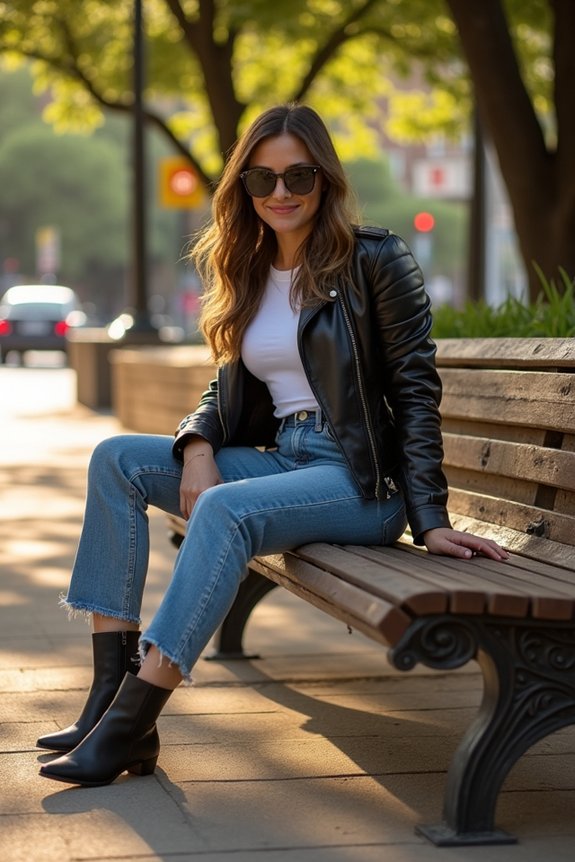
The approach to making ten pieces work all day and into the evening isn’t about having more clothes—it’s about mixing what you’ve got with intention. I start with my go-to denim—dark jeans work for both casual coffee runs and dinner spots. During hot afternoons, I layer a breathable cotton or linen blend tee underneath, then swap it for a moisture-wicking top as temperatures drop. My leather jacket works with everything; it adds refinement to daytime outfits and grounds nighttime looks. For footwear, I alternate between comfortable walking shoes during exploration and loafers or boots when heading out. This approach keeps layering practical without overpacking, letting me move between Austin’s day and night scenes.