
I’d start by checking the invitation for dress code specifics, then pick a knee-length dress, jumpsuit, or tailored pantsuit in neutral tones like gray or beige. Comfortable shoes matter more than you’d think—block heels or supportive flats let you actually enjoy the ceremony without foot pain. Layer up with a cardigan or wrap since venues shift temperatures constantly. Strategic accessories in muted colors keep focus on the graduate, not you. There’s genuine thought behind putting together a coordinated appearance than most people realize.
Start With the Dress Code: Here’s How to Read It
How do you know what’s actually expected when you’re getting ready for a graduation? I always check the invitation first—it’ll tell you if the dress code is formal, semi-formal, or something else. When nothing’s listed, I reach out to the graduate directly because guessing wrong feels awkward.
Here’s what I’ve learned: formal means a full dress, while semi-formal gives you more flexibility with tailored separates or nice rompers. I aim for knee-length or midi-length options since I’m sitting through a ceremony, and comfortable fabrics matter when you’re outside or in varying indoor-outdoor temperatures.
The venue details matter too. Photos and robes are part of the experience, so I avoid bold patterns that clash with graduation gowns. When uncertain, I dress slightly dressier than casual—it shows respect for the occasion and the graduate.
Pick Your Garment Type: Dresses, Jumpsuits, or Pantsuits
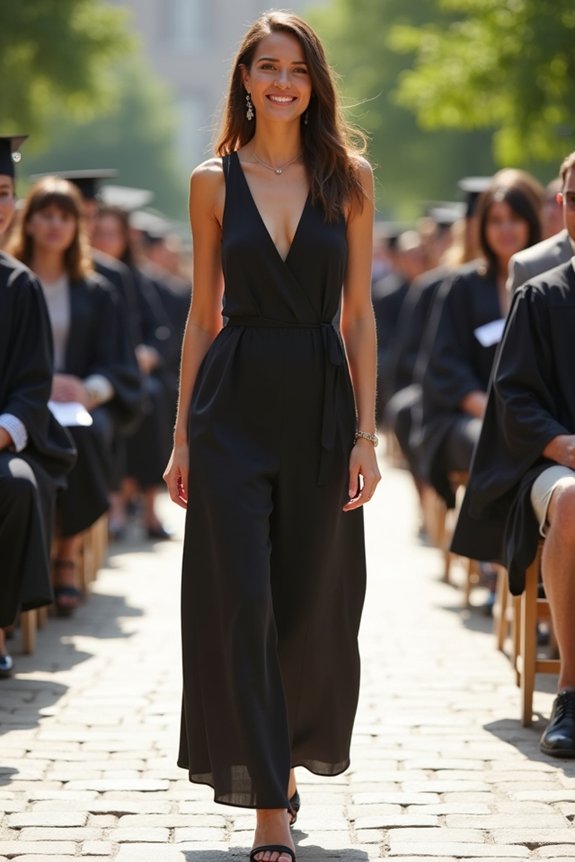
Once you’ve got the dress code figured out, it’s time to pick what you’re actually going to wear—and you have more options than just a dress. Knee-length or midi dresses work well because they’re easy to sit in during the ceremony. If you want something different, jumpsuits offer a modern alternative. Tailored pantsuits or coordinated separates work too, especially for semi-formal graduations. The key is choosing breathable fabrics like cotton blends or linen so you stay comfortable throughout the event. Whatever guest attire you select, pair it with simple accessories and comfortable footwear that handles both indoor floors and outdoor terrain. Your outfit should reflect your personal style while keeping the focus on the graduate.
Choose Neutral Tones With Strategic Color Accents
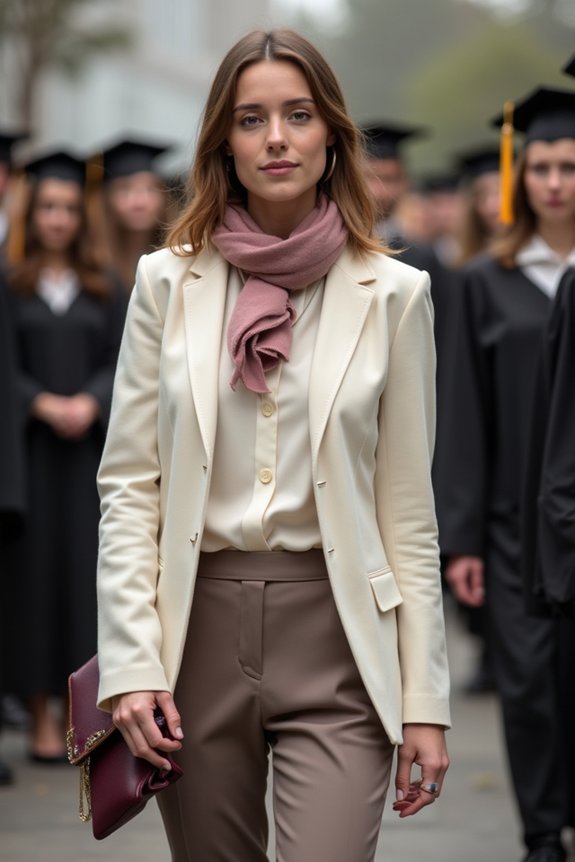
Now that you’ve picked out your garment, let’s talk about color—because what you wear matters just as much as the style itself. Sticking with neutral tones like gray, beige, or charcoal keeps the focus on the graduate where it belongs. Here’s an approach for creating a cohesive look:
- Choose a solid neutral base (dress, pantsuit, or jumpsuit) as your foundation
- Add strategic color accents using soft pastels like lavender or light blue for visual interest
- Coordinate all accessories in muted hues to maintain harmony
This method works because it prevents your outfit from competing with the ceremony’s main event. When you coordinate your shoes, bag, and jewelry in complementary shades, photos turn out balanced and professional. Reserving one bolder accessory piece creates an outfit that feels purposeful without clashing.
Select Comfortable Shoes for the Terrain and Ceremony Length
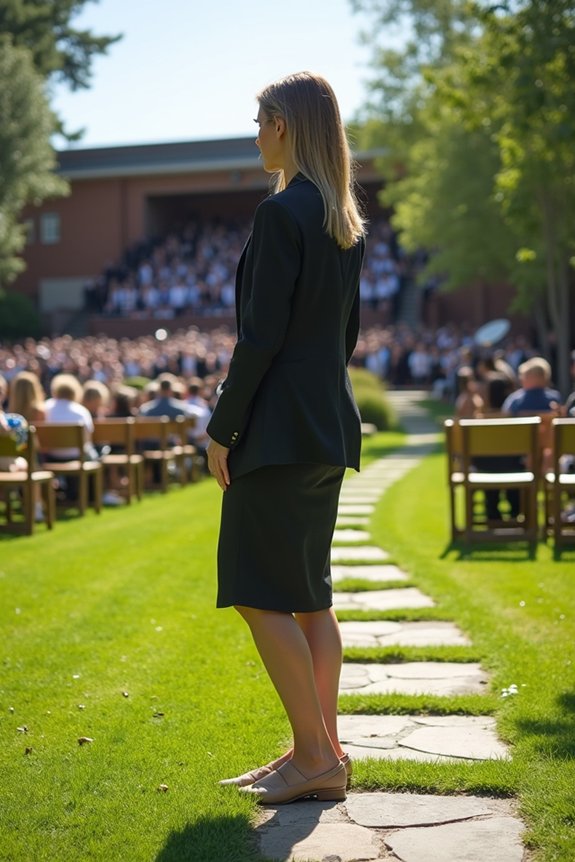
You’ll spend most of the graduation day on your feet—standing through the ceremony, walking to photo spots, and traversing whatever ground the venue sits on—so your shoe choice matters more than you’d think. I’ve learned that block heels, wedges, and flats with good arch support outperform trendy but painful options.
Your shoe choice matters more than you’d think—block heels, wedges, and flats with arch support outperform trendy but painful options.
For an outdoor ceremony, I prioritize breathable fabrics and stable soles that grip grass or stairs without slipping. Indoor events let me choose dressier shoes, yet comfort still comes first during those long standing stretches.
Consider ceremony length alongside terrain when selecting footwear. Two-plus hours demands real cushioning, not just attractive aesthetics. I always test new shoes around my house first, walking on different surfaces to verify they’ll work as needed.
Your feet will thank you later.
Pack Layers for Hot Venues and Cold Outdoor Breezes
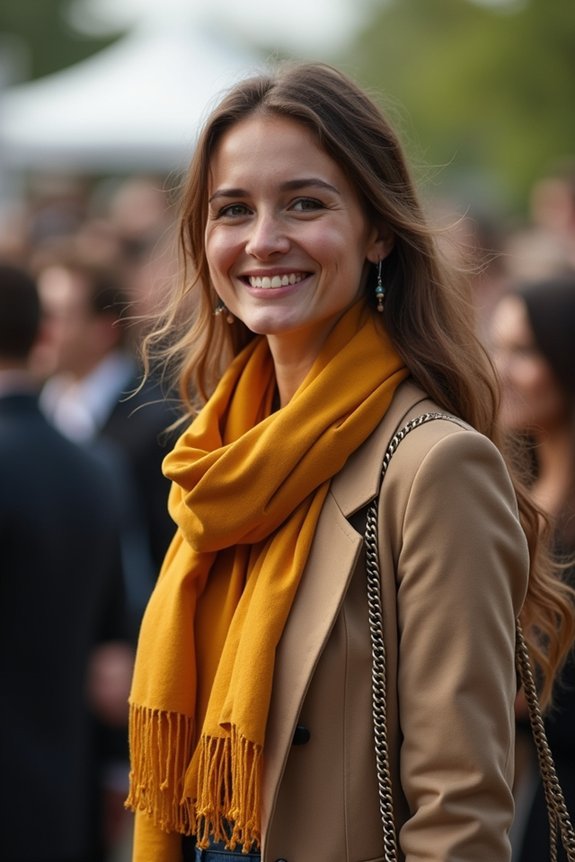
While comfortable shoes handle the physical demands of ceremony day, what you wear on top matters just as much—especially when you can’t predict whether you’ll bake in the sun or shiver in the shade.
Layering works well at indoor-outdoor venues. Here’s what I bring:
- A lightweight wrap or shawl for outdoor breezes and temperature shifts between sun and shade
- Breathable fabrics like cotton blends or linen for summer events, plus moisture-wicking underlayers under your gown
- A compact cardigan or lightweight blazer for indoor air conditioning
These pieces adapt to whatever conditions you encounter. I choose fabrics that don’t trap heat, so I stay comfortable whether I’m outside or moving indoors. This approach lets me focus on celebrating rather than constantly adjusting my outfit.