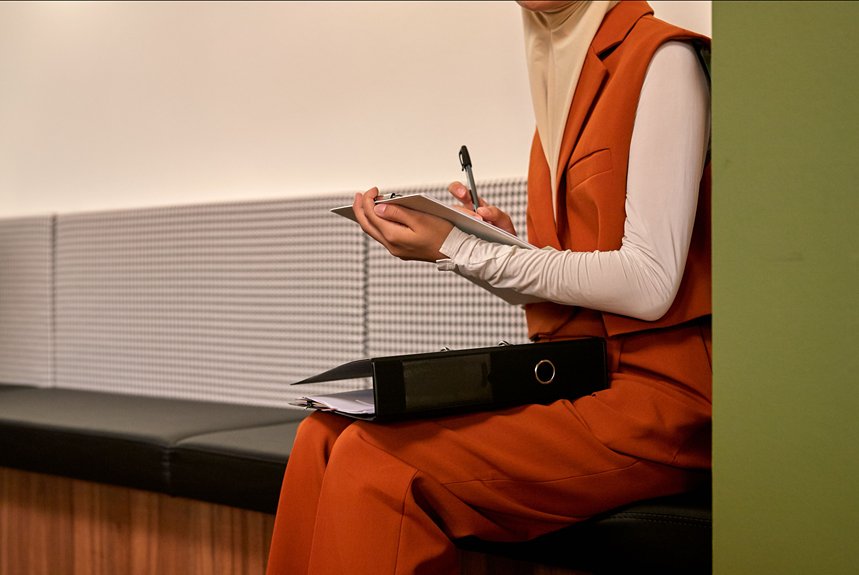
I’d start by checking your company’s dress code policy, but if it’s unclear, business casual is your safest bet. Wear tailored slacks or a knee-length skirt with a clean, wrinkle-free blouse in neutral colors like navy or white. Add a structured cardigan or blazer for refinement, then finish with closed-toe shoes in black or gray. Skip heavy fragrance, make sure everything fits properly without bunching, and inspect for wrinkles and stains before you go. These fundamentals work, though there’s more strategy to master.
Check Your Company’s Dress Code First
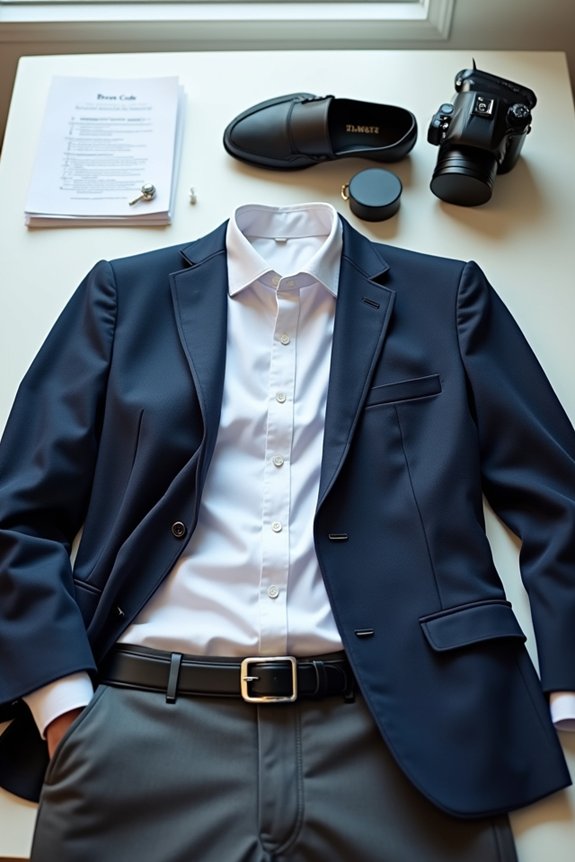
Before you walk through those doors on your first day, you’ll want to find out what your new company expects you to wear, and the best time to do that is right now. I recommend calling HR or checking your offer letter for the dress code policy. This simple step saves you from showing up in the wrong outfit, and it signals that you respect company culture. If your orientation attire guidelines aren’t crystal clear, ask directly—most HR teams appreciate the question. Understanding the dress code helps you feel prepared. Whether your company runs business casual or formal, knowing in advance means you can plan accordingly and align with what everyone else is wearing. You’ll walk in ready to start your role.
Choose Business Casual When the Dress Code Isn’t Clear

When your company doesn’t spell out a dress code, business casual provides a safe middle ground—think neat slacks or a knee-length skirt paired with a solid button-up or blouse, which shows you take the day seriously without overdoing it. A structured blazer or cardigan in neutral colors like navy or gray works well because it keeps you comfortable if the office runs cold, and it creates a refined appearance that functions whether you’re sitting in meetings or walking around. The key is choosing fabrics that don’t wrinkle easily, like cotton blends or ponte, and keeping your shoes closed-toe and clean—flat loafers are a reliable choice that work across different settings.
Understanding Business Casual Standards
How do you know what to wear when your new employer doesn’t spell out the dress code? Business casual is your safest bet. This dress code sits right between formal attire and everyday clothes, striking that balance between approachability and professionalism.
Business casual means pairing tailored slacks or a knee-length skirt with a button-up shirt or blouse. Stick to neutral colors like navy, gray, or white because they project competence without demanding attention. Structured fabrics hold their shape better than flimsy materials, reinforcing that neat appearance.
Skip sneakers and graphic tees entirely. Instead, opt for loafers or leather flats paired with wrinkle-free pants. Proper fit matters tremendously—clothes that hang well on your frame communicate respect for your workplace, which matters during orientation.
Layering For Professional Comfort
You’ve got your business casual foundation down, and now you’ll want to think about layering—it’s the practical approach that makes orientation day comfortable without sacrificing your polished appearance. Cardigan layering works perfectly because you control your comfort level as temperatures shift throughout the day. Start with a professional blouse and dress pants or skirt, then add a cardigan in neutral tones like black, navy, or gray. This approach keeps you looking together while allowing flexibility. I’ve found that cardigans beat blazers for practicality, especially when you’re moving between air-conditioned offices and outdoor spaces. Choose one where your sleeves hit at or just above your wrist for a neat silhouette. You’ll appreciate having that extra layer to remove or add as needed, making professional comfort achievable.
Start With a Clean, Wrinkle-Free Blouse or Shirt

I’d start by pulling your blouse or shirt from the closet and checking it over for wrinkles, stains, or loose threads because even small details like these can make you look unprepared. I’ll iron mine on a medium heat setting if it needs it, and I always go for cotton blends or poplin fabrics since they naturally resist wrinkles better than pure cotton and keep looking crisp throughout the day. A clean, well-fitted shirt that’s free of distractions shows you respect the job enough to present yourself professionally on day one.
Cleanliness Projects Professionalism
Because first impressions happen in seconds, I’ve learned that a clean, wrinkle-free top is non-negotiable on orientation day. Your clothing speaks before you do, and cleanliness directly impacts how people perceive your professionalism and reliability.
Here’s what I focus on:
- Inspect thoroughly – I check for stains, lint, and loose threads because these details affect your presentation
- Press strategically – Wrinkles signal carelessness, so I use a steamer or hang my shirt properly after washing
- Choose smart fabrics – I pick cotton blends or wrinkle-resistant materials that maintain their appearance throughout the day
When you show up with a spotless, pressed blouse, you’re sending a clear message: you respect the opportunity and take professionalism seriously. It’s a practical investment in belonging.
Pressing Creates Polished Appearance
A crisp, wrinkle-free blouse or shirt separates a professional first impression from one that reads as rushed, and proper pressing technique is important on orientation day. I focus on visible areas—front, collar, and cuffs—to avoid shine or fabric damage that happens when you overdo it.
| Fabric Type | Press Well? | Wrinkle Resistance |
|---|---|---|
| Cotton Blend | Yes | High |
| Poplin | Yes | High |
| Pure Linen | Moderate | Low |
Cotton blends and poplin fabrics hold their shape better than pure linen or knits, so I choose those when possible. Proper ironing demonstrates professionalism without requiring extra effort. Your wrinkle-free blouse should fit flat at the bust and shoulders—this detail matters more than most realize.
Pick Bottoms That Fit Your Frame and Match Your Top

How do your bottoms actually fit right now? Choosing the right fit matters more than you’d think for professional attire. Your bottoms should complement your top and create a balanced silhouette that looks intentional. Here’s what I focus on:
- Skirt length: I keep mine at or just below the knee for workplace etiquette, which feels comfortable when I’m moving between meetings
- Trouser fit: I aim for a clean crease without bunching at my ankles, and the inseam hits right at my shoe
- Balance: I pair fitted tops with slightly looser bottoms so I don’t look top-heavy
Consider tailoring if needed. Getting that perfect waist and inseam takes some work, but it will improve how you appear on your first day.
Select Closed-Toed Shoes in Neutral Colors
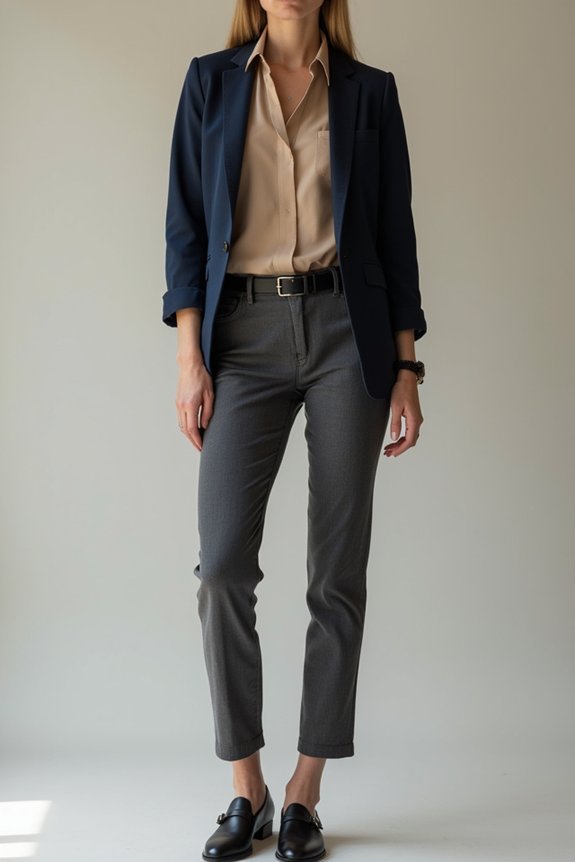
What you wear on your feet matters more than you might think during job orientation, since people notice shoes when you’re walking into the office or sitting across from them in meetings. Closed-toed shoes in neutral colors like black, navy, gray, or brown work best because they match almost everything and keep the focus on you, not your feet. Leather or faux-leather professional footwear with a clean shine presents a professional appearance without excess effort. Avoid sneakers, sandals, or flip-flops—they’ll undermine the polished impression you’re working to create. Make sure your closed-toed shoes are comfortable, and keep them scuff-free and clean. Well-maintained professional footwear demonstrates attention to detail, which matters during your first day.
Stick to Conservative, Neutral Colors for Impact

Why do you think your first impression matters so much on orientation day? I’ve learned that neutral colors signal you’re serious about fitting in, and that matters during your first week.
Neutral colors signal you’re serious about fitting in, and that matters during your first week on the job.
Conservative attire using black, white, navy, or gray keeps the focus on you—your skills and personality—rather than your clothing. Here’s what works:
- Navy blazers and white shirts create a clean, trustworthy look that fits most workplace cultures
- Gray or black trousers pair easily with everything and look intentional, not rushed
- Solid colors or subtle patterns eliminate visual noise, making your professional presentation stronger
I’ve worn these combinations repeatedly, and they’ve worked well for me. Avoiding flashy colors isn’t boring; it’s strategic. When you dress this way, your new colleagues notice your competence first. That’s the goal.
Layer With a Cardigan or Blazer for Temperature Control

I’ve found that a cardigan gives you way more flexibility than a blazer when you’re navigating unpredictable office temperatures, so you can unbutton it or drape it over your shoulders without looking sloppy. If your workplace leans formal or you’re meeting executives during orientation, a structured blazer works better and signals professionalism, but a cotton-blend cardigan in a neutral shade keeps you comfortable in that awkward middle ground where it’s warm outside but freezing inside from air conditioning. Either way, you’re choosing between the ease of a cardigan that lets you adjust on the fly or the authority of a blazer that demonstrates you came prepared for anything.
Cardigan for Professional Flexibility
Since orientation day means you’ll be moving between different spaces—conference rooms, office floors, maybe even outdoor areas—a cardigan gives you real control over your comfort without disrupting your professional appearance.
A well-chosen cardigan works well with professional attire. Here’s what to consider:
- Neutral colors like navy, gray, or black pair easily with most blouses and skirts, keeping your layering versatile throughout the day
- Tailored or semi-fitted cuts maintain a neat silhouette without adding bulk under blazers, so you look deliberate and organized
- Easy on and off lets you adjust quickly between warm and cool spaces without changing your entire outfit
The key is keeping it clean and pill-free, wearing it closed or neatly tucked. This approach works well when navigating unfamiliar workplaces.
Blazer as Formal Alternative
How you layer matters when you’re trying to look put-together and stay comfortable all day long. I’ve found that pairing a blazer with a cardigan gives you flexibility for your orientation day. You can wear the blazer over your cardigan when you’re meeting leadership, then slip it off later for a more relaxed vibe. Pick a neutral blazer—navy, black, or charcoal work best—so it matches everything you own. The fit matters: your sleeves should hit your wrist bone, and it shouldn’t bunch around your shoulders or chest. For warm weather, I reach for lightweight, unlined blazers in cotton or linen blends. This formal wear combo keeps you professional without feeling stiff, and you’ll actually stay cool while looking sharp.
Keep Fragrance Minimal or Skip It Entirely

When you’re walking into orientation, your cologne or perfume shouldn’t be the first thing people notice about you—and that’s exactly what happens in enclosed conference rooms where scents get amplified fast. Fragrance etiquette matters more than many realize.
Here’s what I recommend:
- Skip fragrance entirely or apply only a tiny dab if you must wear something
- Choose unscented personal care products like deodorant and lotion to maintain a neutral appearance
- Keep your professional attire the focus, not competing scents that might distract colleagues
Your workplace fragrance policy likely favors minimal scents anyway. When you arrive unscented, people focus on your qualifications and demeanor rather than what you’re wearing. That’s the objective during orientation—let your professionalism stand out without any competing sensory distractions.
Make Sure Everything Fits You Properly
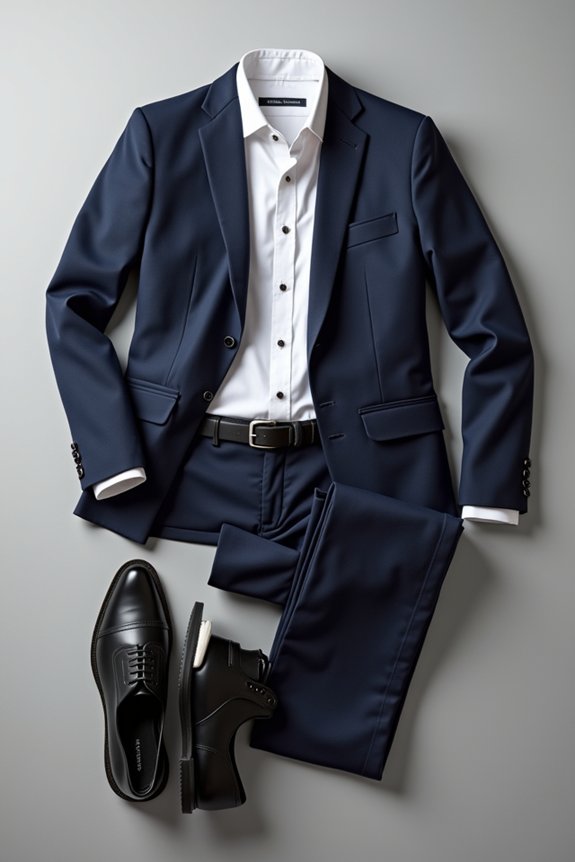
Now that you’ve dialed in your fragrance approach, it’s time to focus on something that’ll actually make or break your first impression: fit. Clothing that doesn’t fit properly makes you look careless, even if everything else is perfect.
Check that your sleeves hit your wrist and your trousers sit at your waist with a clean break. When you move around, nothing should pull or gap awkwardly. I always do a sit-down test because that’s when problems show up.
If you’re between sizes, go bigger and get minor tailoring done instead of squeezing into something tight. Bring a trusted friend or tailor to assess your outfit before orientation. They’ll catch fit issues you might miss yourself. A properly fitted outfit shows you respect the opportunity.
Stay Professional Without Being Overly Stiff

Why does looking professional have to feel like you’re wearing a costume? I’ve learned that nailing your job orientation outfit means balancing polish with comfort, so you’ll actually feel like yourself.
Nailing your job orientation outfit means balancing polish with comfort so you actually feel like yourself, not a stiff costume version.
Here’s how I stay professional without feeling stiff:
- Choose fabrics that breathe: Cotton blends and lightweight wool let me move naturally, unlike heavy synthetic materials that restrict my shoulders and feel constraining all day.
- Add subtle personality: A conservative tie pattern or quality watch keeps my professional attire interesting without breaking the dress code expectations.
- Prioritize comfort fit: My trousers sit at my natural waist, not too tight, which lets me sit comfortably during orientation meetings without tugging at my clothes.
This approach helps me show up as my authentic professional self rather than a stiff version of myself, and that authenticity matters when you’re joining a new team.
Common Mistakes to Avoid on Your First Day

I’ve made plenty of first-day mistakes, and most of them came from overlooking the small things that actually matter. When I started my new job, I wore wrinkled pants because I’d rushed to pack, and that’s a way to seem unprepared. Avoid showing up in dirty or stained clothes, even if you think nobody notices—they do. I’ve also learned that overdoing cologne creates problems in close orientation spaces where you’re sitting near other people all day.
Don’t skip the basics either. Mismatched socks, scuffed shoes, or a crooked tie sends mixed signals about your attention to detail. If you’re unsure about your job’s dress code, wear a suit instead of guessing wrong. These details matter because they show respect for the opportunity and the people welcoming you.