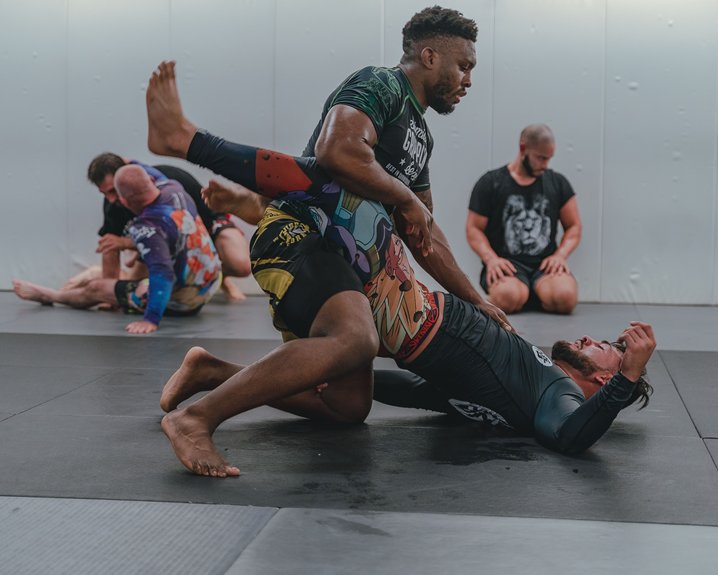
For gi training, wear a fitted rash guard under your gi (the academy usually loans one), and stick with white or blue pre-shrunk cotton gis that fit snug at the shoulders with sleeves ending just above your wrists.
For no-gi, pair compression shorts or spats with a fitted rash guard—avoid anything with pockets or zippers.
Bring flip-flops for transitions and a water bottle, then wash everything after class.
This setup keeps you comfortable and safe during training.
What to Wear to Your First BJJ Class
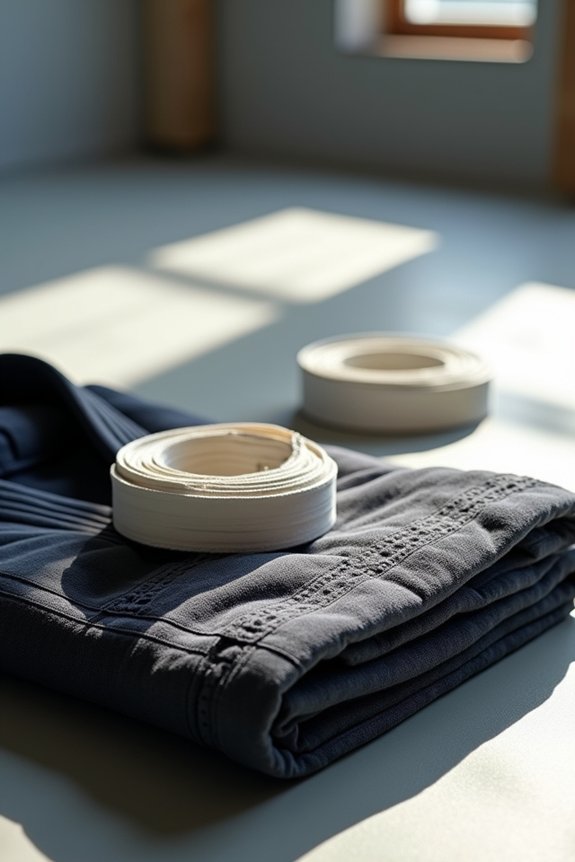
Wondering what you’ll actually need for that first class? You don’t need much. The academy provides a complimentary loan gi, so you’re covered if you show up without one. If you prefer no-gi training instead, wear close-fitting athletic shorts or spats with a fitted rash guard—nothing with pockets or zippers that could catch. For gi training, you can start in basic athletic wear underneath, but a tight-fitting, moisture-wicking rash guard works better than heavy cotton. The fit matters because loose seams cause problems during rolling. One thing to note: footwear stays off the mats entirely. Bring flip-flops or slides for getting to and from the training area. That’s honestly it. You’re ready to start.
Gi Training: What You Need to Know
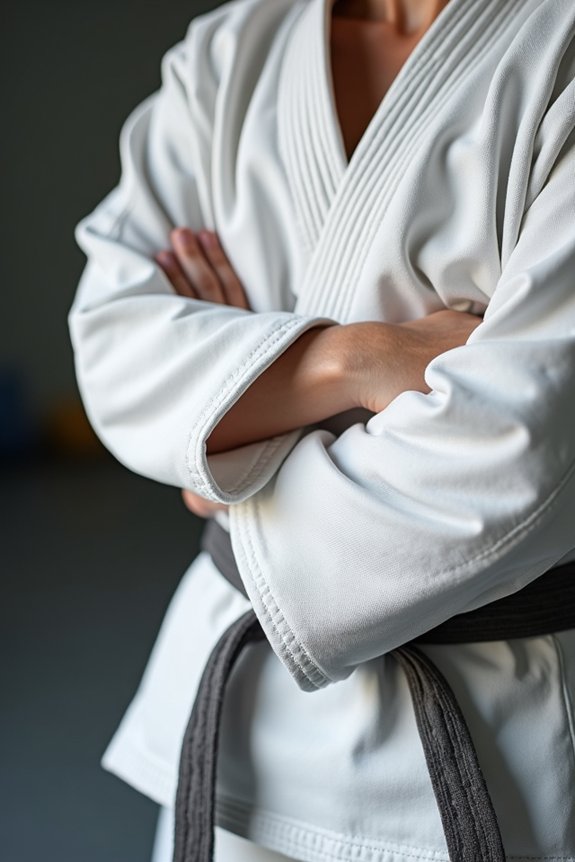
When you’re ready to invest in your first Gi, you’ll want to focus on three key things: finding the right size and fit so it doesn’t bunch up or slip during rolls, choosing a breathable underlayer like a moisture-wicking rash guard instead of cotton (which gets heavy and stays wet), and picking a standard color like white or blue in pre-shrunk cotton that’ll hold up to regular training. A properly fitted Gi—snug at the shoulders and with sleeves ending just above your wrists—will improve how you feel on the mat, and pairing it with the right rash guard underneath keeps everything in place when you’re moving around. Most academies let you try on loaner Gis before you buy, so take advantage of that chance to see what actually works for your body and training style.
Gi Fit and Sizing
How’s your Gi fitting right now—snug around the shoulders, or loose at the sleeves? Getting the right gi fit and sizing matters because ill-fitting gear affects your movement and comfort during training.
| Size | Chest | Sleeve Length |
|---|---|---|
| A0 | 30-32″ | 19-20″ |
| A2 | 36-38″ | 22-23″ |
| A4 | 42-44″ | 25-26″ |
| A6 | 48-50″ | 28-29″ |
I’d recommend choosing a lightweight, pre-shrunk white or blue gi that fits snugly without restricting movement. Under your gi, wear a moisture-wicking rash guard to reduce friction and skin irritation. Your white belt should stay secure unless your academy specifies otherwise. If you’re borrowing a loaner for your first class, staff can guide you through proper sizing, setting you up for success with no-gi options available too.
Essential Underlayers and Support
What you wear underneath your gi matters just as much as the gi itself, because the right underlayers keep you comfortable and protect your skin during intense rolling. Moisture-wicking fabrics are necessary—they pull sweat away from your body, unlike cotton which just holds it. Men should wear compression shorts or athletic underwear that stay put during movements, while women need a supportive sports bra for proper chest support. A rash guard worn under your gi adds an extra layer of protection against mat burns and friction. Underlayers should fit snugly so they don’t bunch up or shift around when you’re grappling. This small investment prevents chafing and keeps you focused on training, not adjusting your clothes mid-roll.
Color and Material Standards
Once you’ve got your underlayers sorted, you’ll want to focus on your actual gi—the uniform itself—because the material and color you choose affect how you move and how long your gear lasts.
Lightweight, pre-shrunk cotton gis work best for training. You’ll find them in white or blue, and your academy likely requires white belts. Here’s what matters when choosing:
- Material: Pre-shrunk cotton prevents shrinkage after washing, keeping your fit consistent
- Color: White or blue gis meet academy standards and hide sweat better
- Sizing: Ranges from A0 to A6, so you’ll find your perfect fit
For No-Gi sessions, wear rash guards paired with shorts or compression shorts—no pockets or loose fabric allowed. This tight fit keeps everything secure during training, unlike regular athletic wear.
No-Gi Training: Athletic Wear Essentials
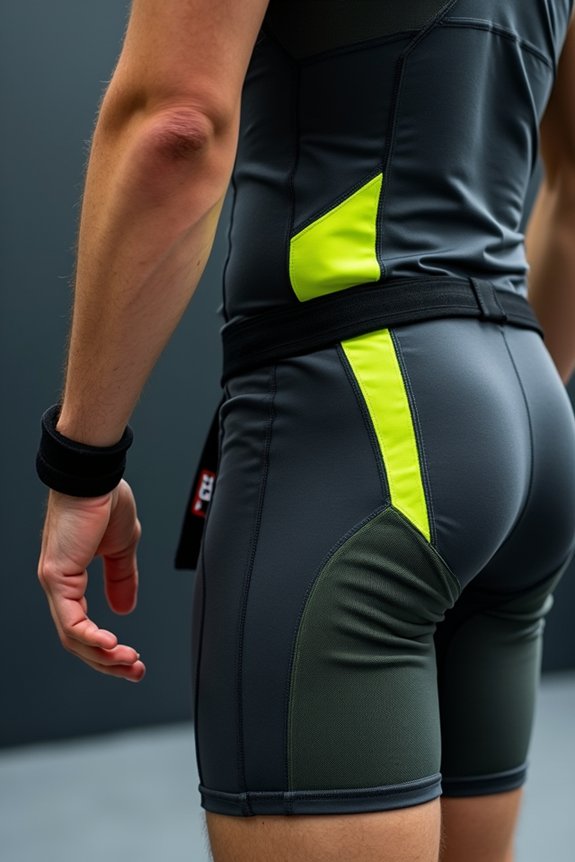
Why you’re ditching the gi for no-gi training matters more than you’d think, because your clothing directly impacts how freely you can move and grapple. I wear compression shorts without pockets or belt loops, which keeps everything secure during intense rolling. A fitted rash guard works best—it stays put when you’re being thrown around, unlike loose shirts that ride up. Board shorts create too much drag, so I’ve switched to athletic compression wear that hugs my body. No pockets means nothing catches or snags on my training partner. Flip-flops get me to the mat quickly, and I leave them at the edge. This setup lets me focus entirely on technique rather than adjusting my clothes mid-roll.
Rash Guards and Underlayers: Reducing Friction and Skin Issues
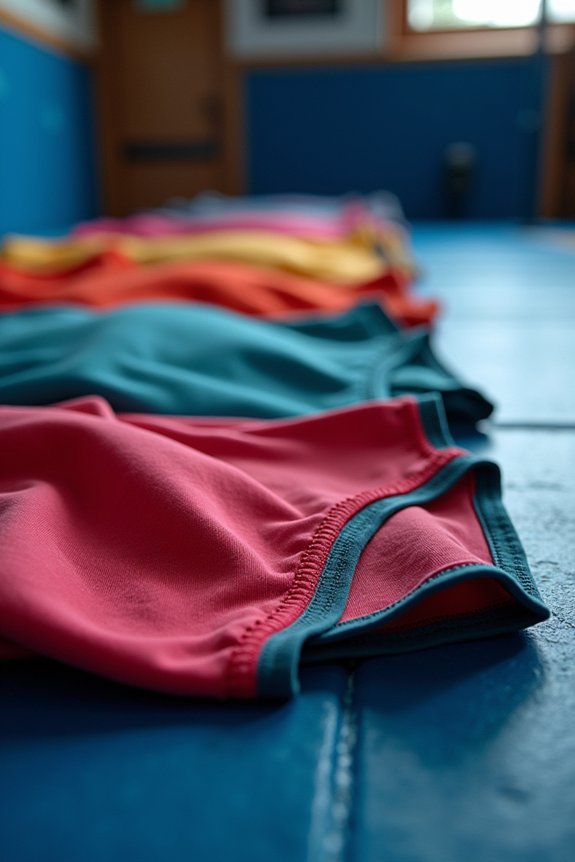
When you’re rolling in BJJ, a moisture-wicking rash guard becomes your best friend because it pulls sweat away from your skin and dries fast, which keeps you comfortable and reduces the friction that causes irritation. I’ve noticed that wearing a fitted athletic top or compression-style rash guard under your gi prevents chafing around the shoulders and armpits during repetitive movements, and it also creates a barrier between your skin and your training partners’ sweat. The hygiene benefit matters too—that layer of breathable fabric keeps bacteria and skin infections at bay, which is why most academies either recommend or require some kind of underlayer during class.
Moisture-Wicking Fabric Benefits
How much sweat can you actually stay comfortable in during a two-hour training session? I’ve found that moisture-wicking underlayers work well. When I wear a rash guard made from breathable fabrics, I stay dry instead of sitting in sweat that clings to my skin. Cotton absorbs moisture and holds it, but moisture-wicking materials pull sweat away fast.
Here’s what I’ve noticed:
- Drying speed – My synthetic rash guard dries in minutes, not hours
- Comfort during rolling – I don’t feel heavy or weighted down by wet fabric
- Reduced odor – Less moisture means fewer bacteria growing on my underlayers
Choosing quality breathable fabrics for your underlayers offers practical benefits. You’re protecting your skin from friction and infections while staying part of the community that takes training seriously.
Preventing Chafing And Irritation
Beyond keeping sweat off your skin, the right underlayers protect you from the friction and irritation that comes with constant grappling and rolling. Choosing moisture-wicking fabrics over cotton makes a real difference in how your body feels during class.
| Issue | Solution |
|---|---|
| Chafing under arms | Fitted rash guard with flat seams |
| Irritation on torso | Compression shorts or athletic underwear |
| Slipping during rolls | Snug, secured underlayers |
| Moisture buildup | Breathable, quick-drying materials |
| Skin infections | Proper rash guard coverage |
When your underlayers stay in place and wick moisture effectively, you’re not constantly adjusting your gi or dealing with uncomfortable rubbing. A quality rash guard hugs your body without restricting movement, and supportive sports bras or compression shorts keep everything stable. Avoiding jewelry helps too—nothing catches fabric like metal. You’ll notice the difference within your first few weeks of training.
Hygiene Protection Under Gi
Your gi jacket sits directly against your skin during every roll, so what you wear underneath matters more than you’d think. I’ve learned that proper underlayers improve your training experience, and here’s why:
- A tight-fitting, moisture-wicking rash guard reduces friction and keeps sweat from pooling against your skin
- Breathable underlayers stay in place during intense movements, preventing bunching or shifting
- Quality undergarments lower your risk of skin infections, which honestly nobody wants dealing with
If you don’t have a rash guard yet, a fitted athletic top works for your first few weeks. Just skip heavy cotton t-shirts and baggy options—they retain moisture and cause chafing. Women should wear a supportive sports bra underneath for comfort and stability. These hygiene protection choices aren’t optional; they’re part of respecting your body and your training partners.
What Else to Bring (Beyond Clothing)
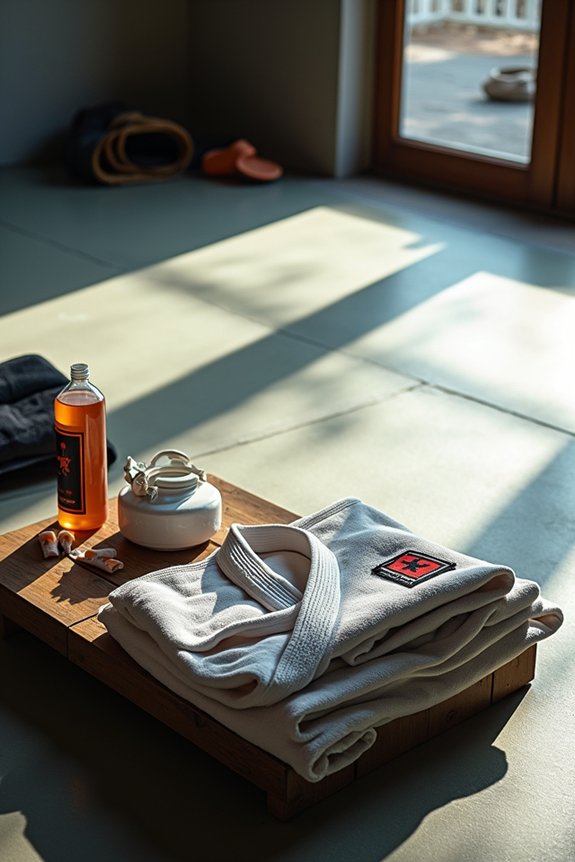
When you’re heading to your first BJJ class, you’ll want to think about what goes in your bag alongside your Gi or No-Gi outfit. Grab a water bottle—you’ll need it during and after training since you’ll sweat more than you’d expect. A towel is optional, but I bring one anyway for wiping down afterward. Don’t stress about buying gear immediately; most academies offer on-site loan Gi options for beginners, so you can try things out first. Pack your hygiene items like soap and deodorant, and remember to wash everything after class. For footwear alternatives, flip-flops or slides work well for getting to the mat. Just keep your shoes off the training area entirely since we train barefoot.
Beginner Clothing Mistakes and How to Avoid Them
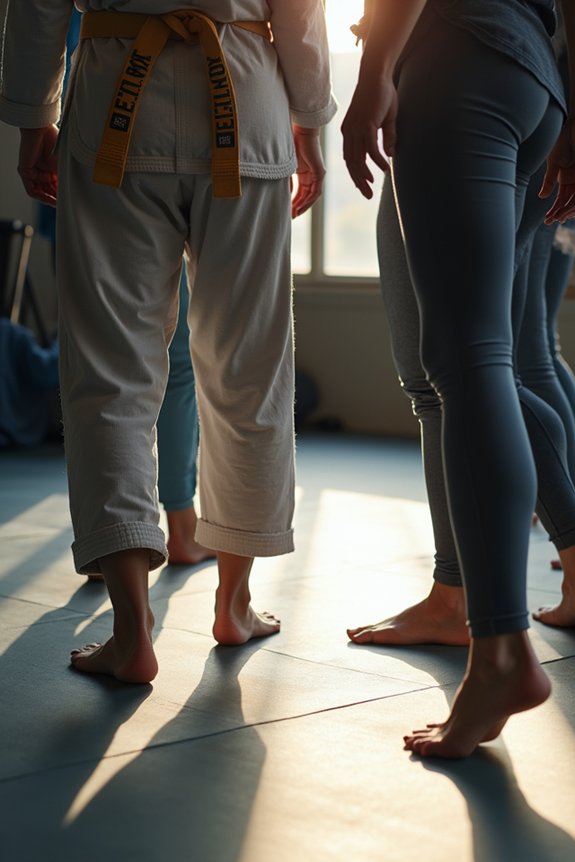
What I’ve noticed watching new students is that most people show up wearing whatever athletic gear they’ve got lying around, and while that works for your first class, some common choices actually get in the way once you start training regularly.
Here’s what I’d avoid:
Heavy cotton, baggy shorts with pockets, and unsupportive tops create safety hazards and restrict movement during training.
- Heavy cotton t-shirts that absorb sweat and restrict your movement during gi training
- Baggy shorts or pants with pockets that catch on the mat and create safety hazards
- Unsupportive tops that shift around during no-gi drills and athletic clothes without proper fit
Instead, grab a fitted rash guard under your gi—it reduces friction and skin issues. For no-gi, wear tight athletic wear without zippers or loose fabric. Women especially benefit from supportive sports bras. Once you commit to regular training, proper athletic clothes work better and feel more comfortable.