
I’d pack moisture-wicking base layers like Capilene to keep sweat off your skin, then add a fleece mid-layer for those chilly evenings.
You’ll want a Gore-Tex jacket with a hood because rain hits fast in Alaska.
Throw in UV sunglasses and high-SPF sunscreen—the sun reflects hard off ice and water even on cooler days.
Finally, grab water-resistant hiking boots plus Tevas for town exploring.
These five pieces handle July’s wild temperature swings, and each one serves a purpose in your bag.
Build Your Alaska Packing Foundation: Moisture-Wicking Base Layers
Why do your base layers matter so much for an Alaska July trip? I’ve learned they’re your travel packing foundation because Alaska’s weather shifts constantly, and you’ll sweat during hikes, yet need warmth when temperatures drop. Moisture-wicking base layers pull sweat away from your skin, keeping you dry and comfortable—something cotton can’t do.
I recommend inner layers made from Capilene-like materials or similar quick-drying fabrics. These base layer fabrics prevent odor buildup on long excursions, which matters when you’re out for days. Your layering strategy becomes simple: wear a thermal base layer alone on hot days, then add tops during cooler mornings and evenings. This sweating management approach means you’ll stay comfortable, whether you’re hiking or exploring town.
Layer In Warmth With a Mid-Layer for Cool Moments
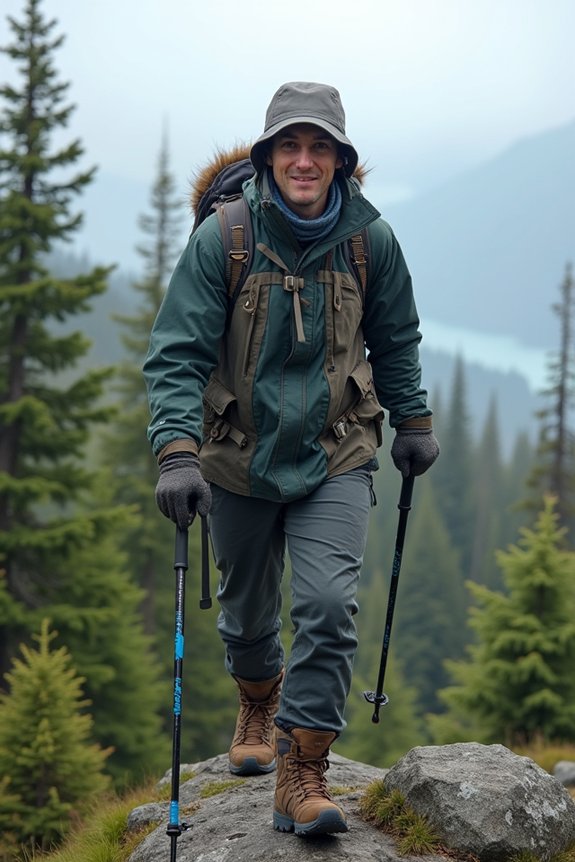
Your base layer keeps moisture off your skin, and now you’ll need something to trap warmth when those cool Alaska mornings hit before you’re even out of camp. A solid mid-layer creates the insulation you need without weighing you down during July’s temperature variance.
Here’s what works best for Alaska’s layering system:
- Expedition-weight long underwear or fleece jacket traps heat effectively while staying lightweight
- Synthetic materials outperform wool or cotton, offering warmth without bulk during variable conditions
- Looser fit allows air pockets for insulation and comfortable movement beneath your outer shell
Choose your mid-layer one size larger than your base layer for mobility and proper airflow. This piece works alongside your other layers to handle cool moments without restricting your activity, making it an important part of your Alaska July adventures.
Seal Out Wind and Rain: Choosing Your Waterproof Outer Shell
When you’re layered up underneath, the right outer shell is important between staying comfortable and getting soaked through on Alaska’s water and trails. I’ve learned that a waterproof outer shell with breathable fabric is necessary. Gore-Tex or equivalent membranes with a hood protect against rain and wind while keeping you dry during shore excursions and time aboard. Nylon pants with zip-off legs dry fast after splashes, letting you adapt quickly when conditions shift. Your packable outerwear should compress small so it doesn’t weigh you down during long days outdoors. Layer it over your moisture-wicking base layer and insulating mid-layer, and you’ve got a system that works in Alaska’s unpredictable July weather.
Protect Your Eyes and Skin From Alaska’s Intense July Sun
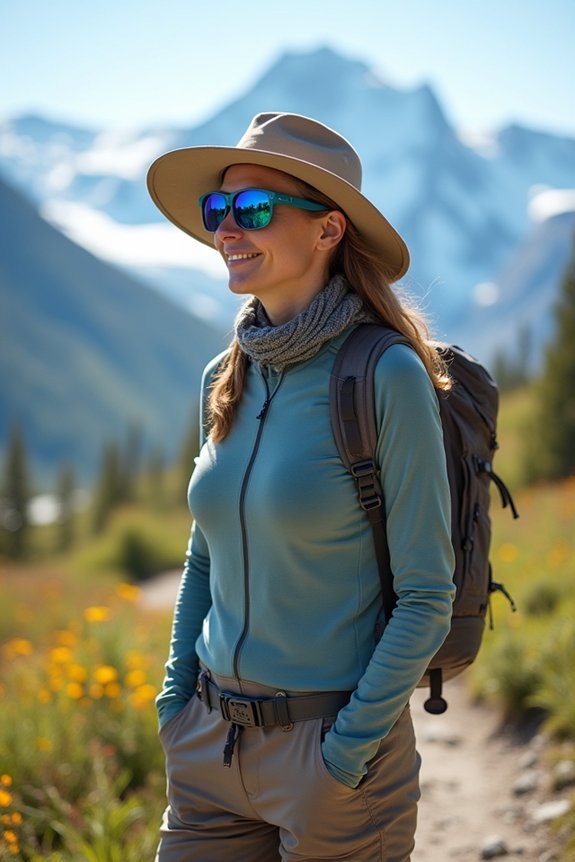
Once you’ve got your waterproof shell locked down, you’ll notice Alaska’s July sun hits different than what you’re used to, and that’s because of the extreme daylight hours and all that reflection bouncing off water and snow. You need serious sun protection out here.
Alaska’s July sun is relentless—extreme daylight and reflection off ice and water demand serious sun protection you can’t skip.
Here’s what I always pack for eye and skin protection:
- Sunglasses with UV protection to shield your eyes from direct sun exposure and reflective surfaces bouncing off glaciers and water
- High-SPF sunscreen applied every two hours, especially on exposed skin during long daylight hours
- A wide-brimmed hat or cap that covers your face and neck while managing sun exposure
The combination of extended daylight and reflective surfaces makes sunscreen and sunglasses non-negotiable gear, not optional accessories.
Complete Your Pack: Footwear, Gear, and Accessories for Unpredictable Terrain
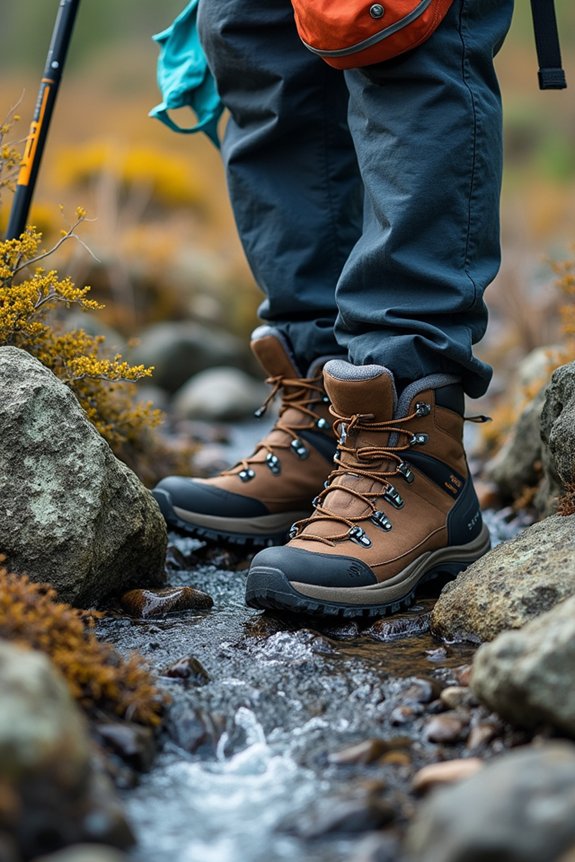
Because Alaska’s terrain shifts constantly from wet riverbeds to rocky slopes to ship decks, I’ve learned that footwear versatility is essential for a successful trip. I pack water-resistant hiking boots for serious trails, plus Tevas or sandals for warmer moments and deck time. Your packing list should also include moisture-wicking layers—they’ll keep you dry during unexpected rain and cooler evenings.
I’ve found that a waterproof jacket with hood and insulation handles July’s unpredictable swings better than anything else. Add collapsible trekking poles for steep terrain and a compact umbrella for sudden downpours during shore excursions.
Don’t overlook weather-ready accessories either: a waterproof bag protects your travel gear, while sun protection and bug repellent manage Alaska’s intense summer conditions. These pieces work together, creating a system that lets you move confidently across whatever landscape appears next.