I’d prioritize three essentials for deep sea fishing: a wide-brimmed hat with chin strap and polarized sunglasses to block UV rays and water glare, a UPF 30+ long-sleeve shirt that dries quickly, and closed-toe boat shoes with textured non-slip soles for wet decks. Layer underneath with moisture-wicking base layers, add a lightweight mid-layer, and top with a windbreaker for shifting offshore temperatures. These pieces work together protecting your skin, keeping you stable, and maintaining comfort through unpredictable conditions—though there’s quite a bit more strategy involved in getting your layering right.
Sun Protection: Hat, Sunglasses, and UPF Clothing for Deep Sea Fishing
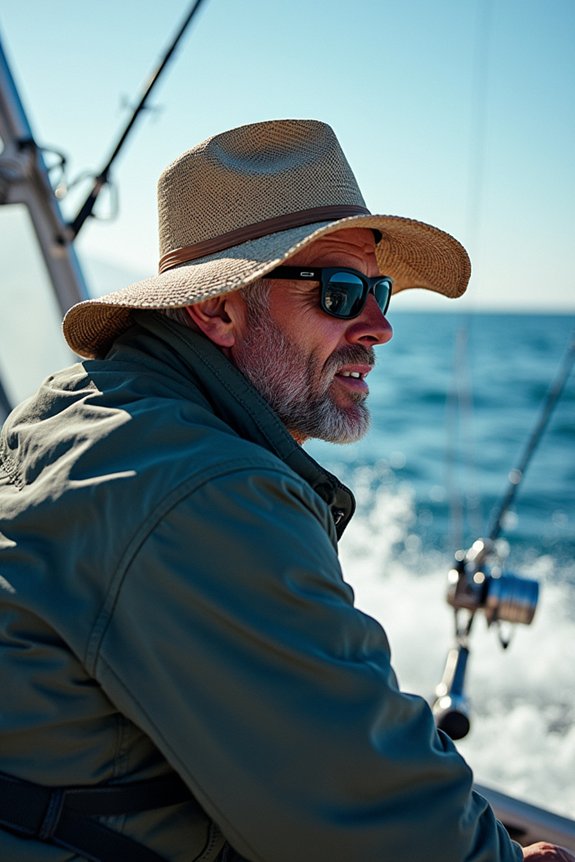
Because you’ll spend hours exposed to direct sunlight bouncing off the water, protecting your skin and eyes becomes necessary on deep-sea fishing trips. I’ve learned that a wide-brimmed hat with a chin strap shields your face and neck while staying secure in offshore winds. Polarized sunglasses cut the water’s glare and block UV protection your regular shades miss. I always wear a long-sleeve UPF shirt—UPF 30 or higher—because it’s my best defense against prolonged sun exposure. A neck gaiter adds versatile coverage for variable conditions, and I’ve found quick-dry fabrics with moisture-wicking properties reduce salt spray discomfort. These aren’t optional accessories; they’re what keeps you comfortable and protected during your deep-sea trip. When you gear up properly, you’re joining anglers who take sun protection seriously.
Non-Slip Footwear: Your Foundation on Wet, Slick Decks
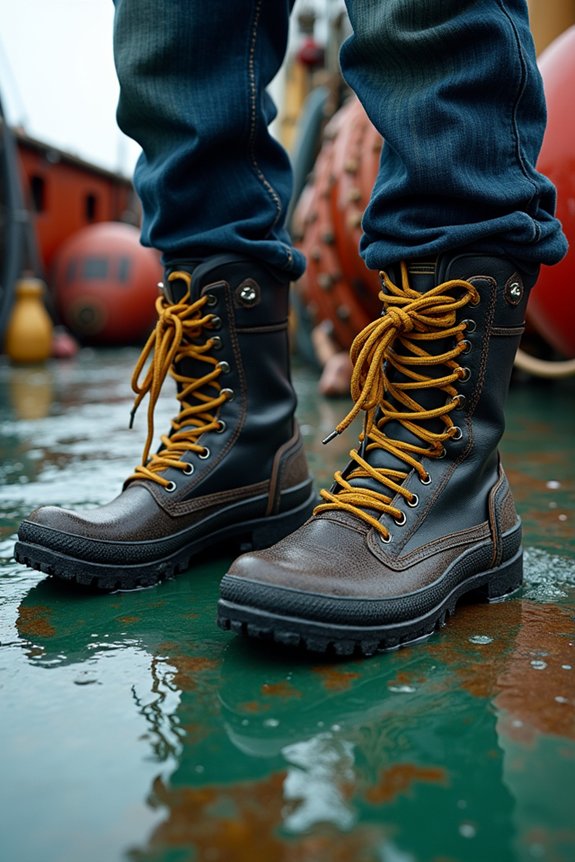
While you’re protecting your skin from the sun’s rays, your feet need just as much attention on a rocking boat deck. Slip resistance isn’t optional—it’s survival on wet surfaces covered in fish slime and salt spray.
Slip resistance isn’t optional—it’s survival on wet surfaces covered in fish slime and salt spray.
Your boat footwear choice directly impacts deck safety and hazard prevention. Here’s what works:
- Boat shoes with closed-toe designs offer sturdy grip and stability during movement
- Crocs with drainage holes provide comfortable non-slip shoes that dry quickly
- Sandals with heel straps keep your feet secure if fitted snugly
- Water drainage features prevent pooling that causes dangerous slipping
Non-slip shoes with textured soles handle bait handling tasks without sacrificing comfort. Look for footwear rated for wet environments—your ankles will thank you when you’re reeling in your catch.
Thermal Layering Strategy for Changing Offshore Conditions
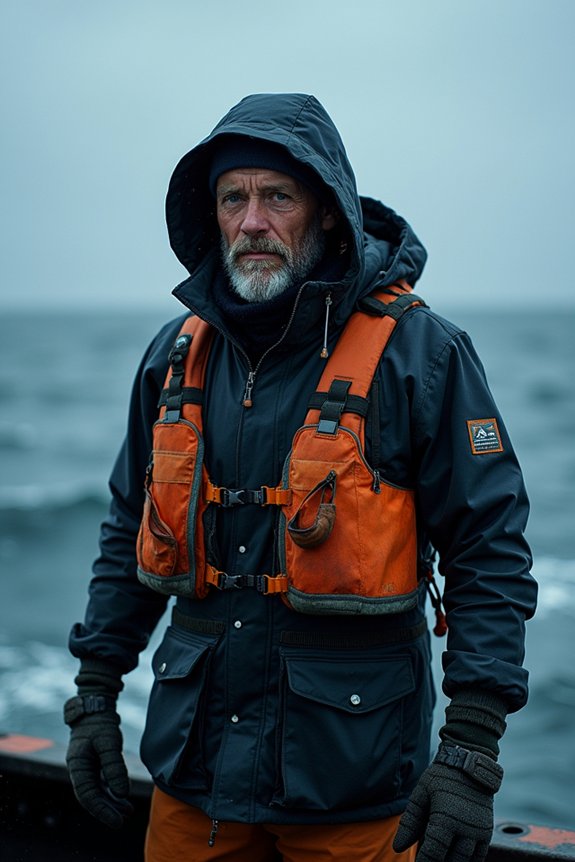
Once you’ve got your feet sorted on that slick deck, your torso needs the same smart approach to staying comfortable through unpredictable offshore conditions. I start with a moisture-wicking base layer that pulls sweat away from my skin, keeping me dry when temperatures shift. Next, I add a mid-layer like a lightweight fleece or hoodie for insulation during cool mornings, though conditions warm later. On top, a windbreaker or waterproof jacket shields me from sea breeze and light spray without weighing me down. For my legs, I wear quick-dry fabric pants or shorts that bounce back after splashes or rain showers. When offshore winds pick up, I’ll grab a thin beanie or gloves. This layering system lets me adjust as the day evolves.