I’d build your outfit in three layers: a breathable cotton tee underneath, a thin cardigan or jersey mid-layer for warmth, and a lightweight trench or bomber jacket on top. Choose fabrics like cotton-polyester blends or merino wool that regulate temperature without bulk.
Pair fitted tops with structured bottoms to keep proportions balanced, and mix textures—like suede with cotton—for visual interest.
Stick with ankle-length hems on wet days, and swap heavy sweaters for lightweight pieces you can shed as temperatures climb. There’s more strategy that’ll help you nail those in-between days.
Build Your 60-Degree Outfit in Three Layers: Base, Mid, and Outer
Why does layering help you actually enjoy 60-degree weather instead of constantly adjusting your clothes? I’ve found that building outfits in three distinct layers makes temperature shifts manageable.
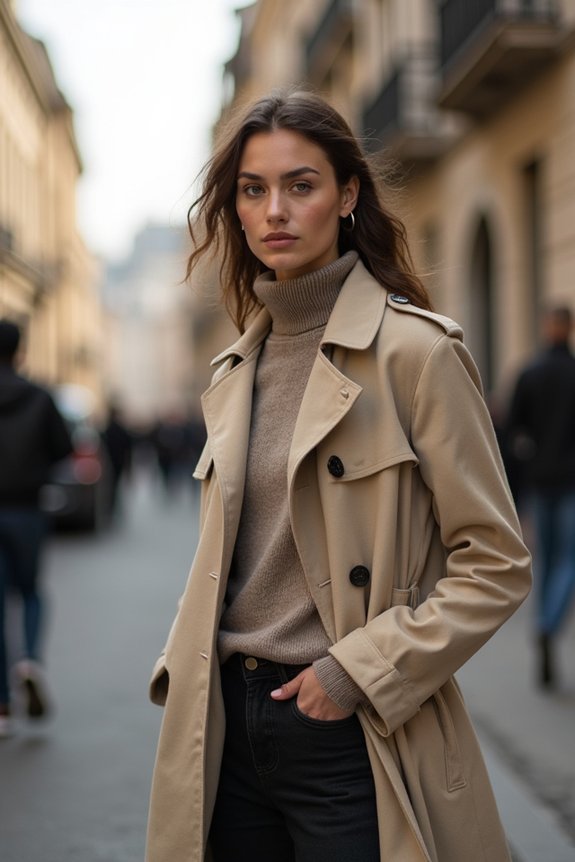
My base layer starts with a light cotton tee or breathable jersey top that moves with me throughout the day. I add a mid-layer like a thin sweater or cardigan for warmth without heaviness, and it peels off easily when the sun peaks. My outer layer—a trench, bomber, or utility jacket—blocks wind while staying flexible for layering adjustments.
This 60-degree weather strategy lets me shed pieces as temperatures climb from cool mornings to warmer afternoons. I’m not stuck overheating or shivering; instead, I’m comfortable and in control of my own climate.
Choose Breathable Fabrics That Adapt to Temperature Shifts
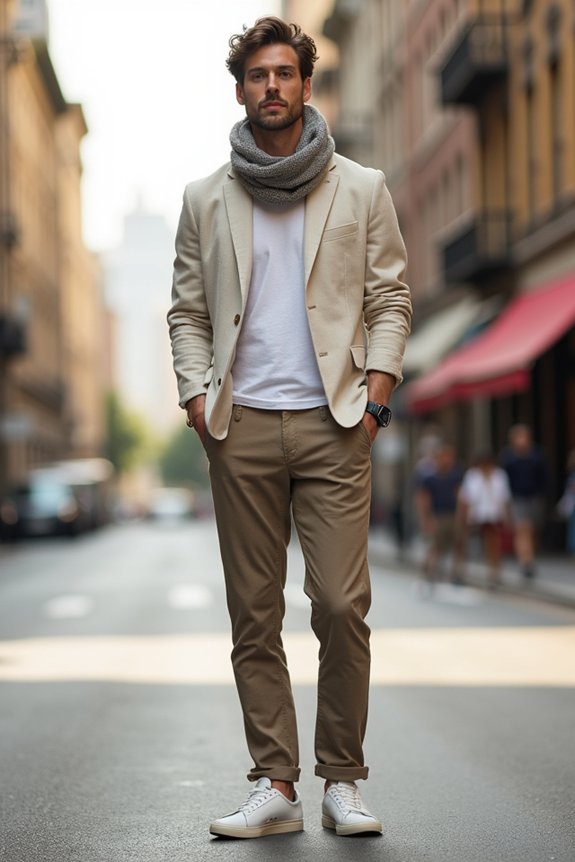
I’ve found that cotton blends work best for me at 60 degrees because they breathe well without feeling too thin, and merino wool is my go-to for mid-layers since it naturally regulates temperature without the itchiness of regular wool. Light denim gives you flexibility when layering—I can wear it as a jacket over a cardigan or roll up the sleeves when I warm up during the day. These three fabrics let you adjust on the fly, which is more practical than carrying an extra sweater you’ll never wear.
Cotton Blends For Breathability
Cotton blends are a practical choice for 60-degree weather because they adapt to temperature changes rather than resist them. Mid-weight cotton blends (120–200 g/m²) offer a balanced combination of warmth and breathability, preventing overheating during layering transitions. Jersey-knit cotton blends provide stretch and comfort, allowing free movement under lightweight jackets without restriction. Cotton-polyester blends resist creases, maintaining a neat appearance as conditions shift throughout the day. Adding spandex or elastane to your cotton blend gives you sufficient give for a slim fit while preserving airflow.
| Blend Type | Weight Range | Best For | Key Benefit |
|---|---|---|---|
| Cotton-Polyester | 120–150 g/m² | Crease resistance | Sharp appearance |
| Jersey-Knit Cotton | 140–180 g/m² | Movement | Comfort and stretch |
| Cotton-Spandex | 130–170 g/m² | Fitted silhouette | Breathable flexibility |
| Mid-Weight Cotton | 150–200 g/m² | Layering | Temperature adaptability |
Merino Wool Temperature Regulation
Since 60-degree weather swings between chilly mornings and mild afternoons, you’ll want fabrics that work with your body instead of against it—and that’s where merino wool shines. I’ve found that merino’s temperature regulation keeps me comfortable without constant outfit adjustments. The moisture-wicking fibers pull sweat away from your skin, so you stay dry whether it’s cool or warming up. For layering, I pair a merino button-down over a base tee or under a light shell jacket. This setup adapts smoothly as temperatures shift throughout your day. What makes merino practical is that it’s inherently odor-resistant and wrinkle-free, meaning fewer outfit changes and less laundry. When you’re building a 60-degree wardrobe, merino pieces become your reliable foundation layer—breathable enough for active days, warm enough for crisp mornings.
Light Denim Layering Flexibility
While merino wool handles the base layer role, denim becomes your go-to middle piece for 60-degree weather, and here’s why—it’s forgiving, it looks intentional, and it actually breathes better than people think. I’ve found that cotton-blend and stretch denim work best for transitional outfits because they let air move through while keeping you warm enough. The key? Pick slightly relaxed fits that give your layering room to breathe without feeling baggy. I pair my light denim with thin mid-layers like cotton jerseys or lightweight knits, and I can adjust quickly as temperatures shift from cool mornings to warmer afternoons. For 60-degree weather, breathable fabrics layered thoughtfully mean you’re comfortable all day, whether you’re moving around or staying put.
Pair Fitted Tops With Structured Bottoms to Avoid Bulk
When you’re layering for 60-degree weather, fitted tops paired with structured bottoms like straight-leg jeans or ponte pants give you the balanced silhouette you’re after, and this combo works better than throwing on an oversized sweater that bunches up under a jacket. The key is choosing lightweight fabrics—cotton or jersey work great—so you don’t add unnecessary bulk beneath your layers. Tucking in your fitted top defines your waist and creates that streamlined look, which affects your proportions. Matching fabric weights matters too; pair smooth knits with smooth chinos for cohesion. This approach keeps everything proportional and prevents that stuffed feeling when you’re wearing multiple layers in mild temperatures.
Mix Textures to Add Visual Interest Without Adding Weight
How do you keep an outfit interesting on a 60-degree day without feeling like you’re wearing a puffy marshmallow? I mix textures strategically across my layers, and it works.
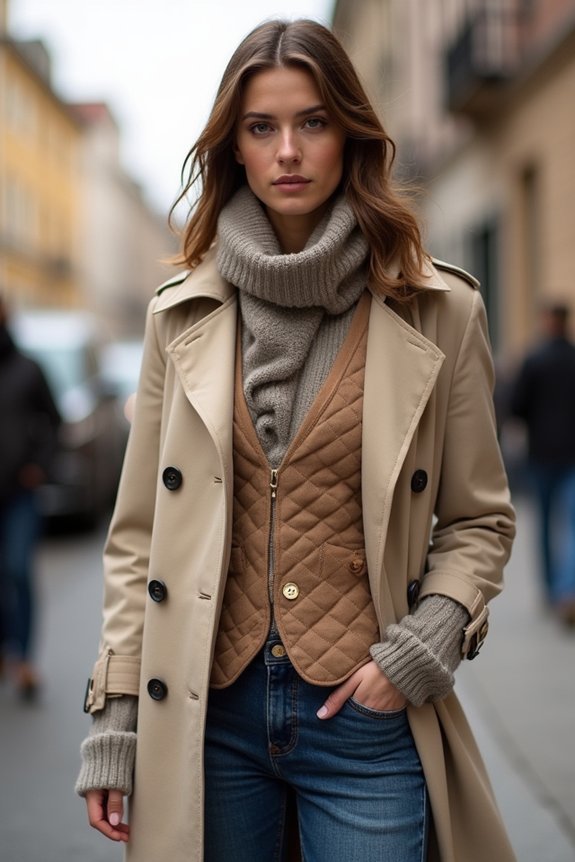
I start with a cotton base, add a lightweight cashmere or merino mid-layer, then top it with suede. This tactile mix creates visual depth without bulk. Pairing white stripes against darker pieces adds contrast that draws the eye toward those interesting textures you’ve layered.
The key is spreading your textures across different layers—base, middle, outer—rather than cramming them all into one spot. That way, you get dimensional warmth without overheating. My favorite combo? A suede jacket over black jeans with a cotton tee underneath. The textures play off each other, keeping my silhouette streamlined while making the outfit feel deliberate and well-composed.
Pick Footwear That Works for Weather and Activities
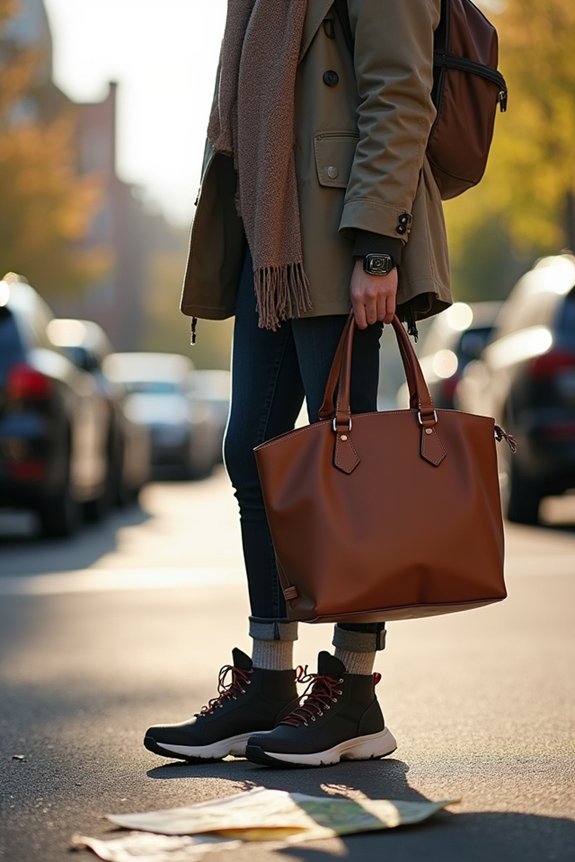
Your outfit’s textures might be perfectly layered, but your feet’ll let you down fast if you’ve picked the wrong shoes for 60-degree weather. I’ve learned that versatile footwear like loafers, flats, or heeled sandals work best because they adapt to temperature shifts. When it’s closer to 65°F, I reach for heeled sandals to keep my feet cooler while staying composed. As temperatures drop toward 55°F, low-ankle boots or taller footwear add necessary warmth. Weather-appropriate footwear materials matter too—suede works in dry conditions, but I avoid untreated suede when rain’s expected. I always pair my transitional footwear with straight-leg or wide-leg pants to prevent wet hems from dragging. Choosing sturdy soles with light tread keeps me comfortable on uneven surfaces, grounding my whole look with stability.
Adapt Your Layers for 55°F vs. 65°F Days
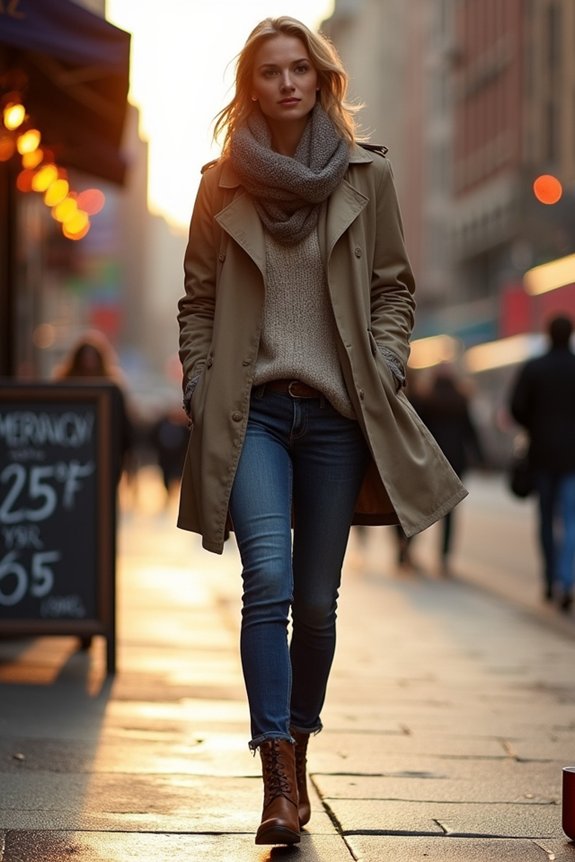
The real trick to 60-degree weather isn’t just picking one outfit—it’s building flexibility into what you wear so you can handle those 10-degree swings between morning and afternoon. Mastering layering across temperature shifts keeps you comfortable without constantly changing clothes.
At 55°F, start with a light base top, add a thin cardigan or sweater as your mid-layer, then top it with a snug outer layer that traps warmth. Dense knits and ponte pants work best here, and stick with richer colors that feel seasonally appropriate.
When it hits 65°F, shed that outerwear entirely and swap heavier bottoms for breathable midi skirts or straight jeans. Your lightweight top handles the temperature shift perfectly, letting you adjust without sacrificing comfort or style.
Skip Bulky Pieces and Long Hems in Wet Weather
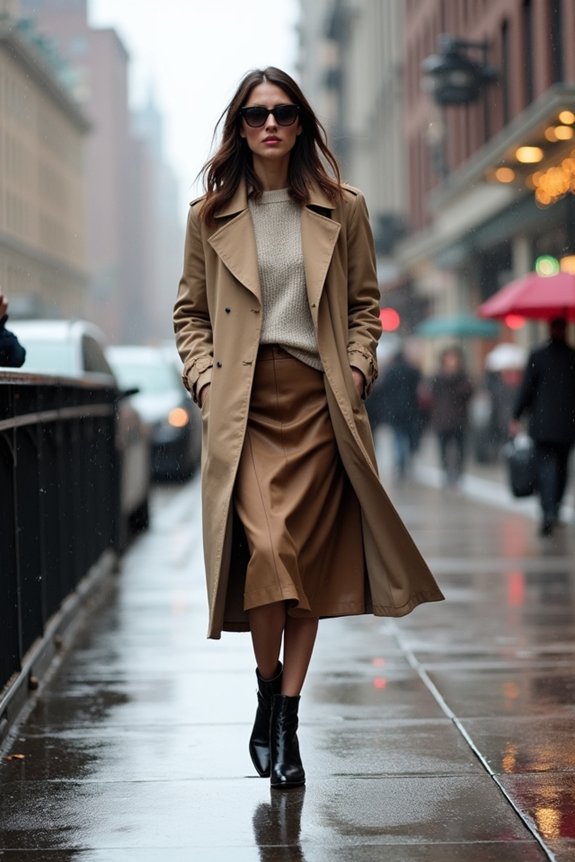
When you’re dressing for wet 60-degree weather, ground-dragging hems on jeans or pants soak up water like a sponge and pick up mud within minutes, so ankle-length cuts that hit right at your shoe work better. Instead of puffy jackets or chunky cardigans that trap moisture and look oversized under rain gear, layer a breathable base layer with a lightweight trench or shell jacket—this combination keeps you dry without the heavy feeling, and the sleeker silhouette looks better on gray, damp days. Pairing these pieces with neutral tops and simple fits means you’re not adding bulk where it’s not needed, which matters when you’re already wearing weather protection on top.
Avoid Ground-Dragging Hems
Have you noticed how quickly hems pick up moisture and grime when they drag across wet pavement? I’ve learned that keeping hems above the ground on wet days prevents water splash and mud transfer from puddles. The key is choosing straight or slightly cropped lengths that clear your shoe, especially with boots.
I pair longer hems with ankle boots or loafers, which catch less moisture than taller footwear. When I do wear longer lengths, I opt for water-resistant fabrics and quick-drying blends to minimize saturation time. Rolling or cuffing hems works too—it keeps them off wet sidewalks while maintaining clean outfit lines.
These small adjustments help you stay fresh during damp weather.
Choose Lightweight Outer Layers
Lightweight outer layers work well at 60 degrees, and skipping the heavy parka altogether makes a real difference in how you move and feel throughout the day. A trench coat, bomber jacket, or utility jacket gives you protection without the bulk, so you’re not weighed down or overheating. I reach for breathable fabrics like cotton blends and lightweight denim because they let your skin breathe as temperatures shift. When it’s wet, I choose a water-resistant shell instead of those long, heavy raincoats that restrict movement. Pairing your lightweight outer layer with a thin cardigan underneath lets you regulate temperature without adding excessive length or weight. These pieces keep you comfortable, mobile, and ready for whatever the day brings.
Opt For Breathable Fabrics
Why do so many people default to heavy sweaters when 60 degrees rolls around? They’re missing what breathable fabrics actually offer during transitional weather. I’ve discovered that cotton blends and merino wool keep me comfortable without overheating, so I layer strategically instead. Lightweight layering pieces like thin cardigans and denim shirts let me adjust as temperatures shift throughout my day. When I skip bulky pieces, I move freely and stay regulated—no sweating under a heavyweight sweater by noon. For wet weather, I choose knee-length silhouettes over long hems that trap moisture and take forever to dry. Mid-weight outerwear like bombers or utility jackets provide wind protection without the bulk that restricts movement. These breathable materials work together, keeping me dry and comfortable during those unpredictable 60-degree days when conditions constantly change.