I always start with closed-toe shoes that have textured soles—they keep my feet stable when I’m shifting my weight before release. Then I wear fitted cotton-blend pants and a breathable shirt so I can move freely without restriction, and I skip anything baggy or tight at the sleeves. Finally, I remove all jewelry and loose accessories because dangling rings or scarves create real safety hazards near the equipment. There are more outfit specifics to consider if you want additional details.
Wear Closed-Toe Shoes With Good Grip
Your footwear choice matters way more than you’d think when you’re stepping up to throw an axe. I’ve learned that closed-toe shoes with non-slip soles are necessary for safety and stability during throws. You’ll want reinforced toe protection and a secure, lace-up fit to prevent your foot from shifting mid-throw—something I discovered after my first wobbly attempt.
The grip matters tremendously. I always look for textured outsoles because they reduce slips when I’m adjusting my weight before release. Closed-toe shoes protect your toes from dropped axes, and athletic footwear with quality construction gives you the stability you need.
Skip sandals, flip-flops, and canvas sneakers entirely. I’ve seen people struggle with unstable footing, and it’s not worth the risk. Proper footwear guidelines exist because they work. Your feet will thank you.
Choose Fitted Clothing That Allows Full Movement
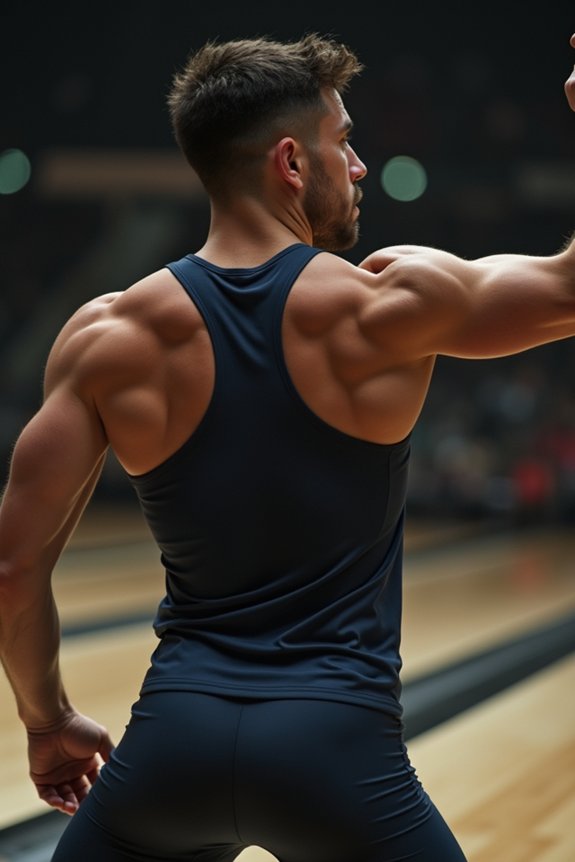
Why does what you wear matter just as much as your throwing stance? Your outfit directly impacts your axe throwing performance and safety. I’ve learned that fitted clothing gives you the mobility you need for a smooth throwing motion without restriction.
Athletic wear made from breathable cotton-blend fabrics works best because it moves with your body. Choose stretchy pants that allow full range of motion through your hips and legs during your backswing. Avoid bulky hoodies or tight sleeves that snag during release, as I discovered after my first session.
Your grip matters too, so skip dangling jewelry and loose scarves entirely. Fitted tops with proper sleeve placement support your throwing motion while keeping everything secure. When your clothes fit right, your muscle memory develops faster, and you’ll throw with more precision.
Layer Up and Remove Jewelry From Your Axe Throwing Outfit
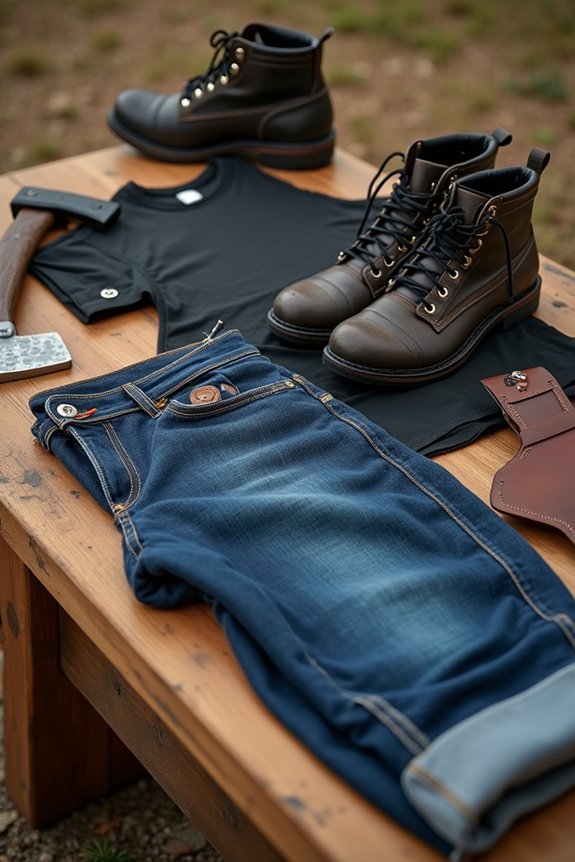
How you layer matters more than most people think, and I’ve found that starting with a light, breathable base shirt—like a cotton-blend tee—gives you flexibility as your body warms up during throws. Add a removable jacket or hoodie for indoor-outdoor transitions between the 68–72°F facility and outside conditions. Start slightly cool so you can shed layers as you heat up, which keeps your throwing range uncompromised.
Beyond clothing, remove all jewelry before stepping up to throw. Rings, bracelets, and necklaces create safety hazards near the axe and target. These accessories snag on equipment or distract you mid-throw. Stick with flexible fabric that breathes and stays in place—avoid loose ends on sleeves or drawstrings. Following these safety guidelines protects you and keeps your axe throwing outfit practical for serious practice.