
Your outfit’s job is getting interviewers to focus on your skills, not your clothes. Research the company culture first—startups dress differently than law firms—then choose neutral colors and clean lines that won’t distract. Fit matters way more than the price tag, so invest in tailoring basics like blazers and dress shirts. Keep grooming simple: clean nails, neat hair, minimal makeup. Lay out your entire outfit two to three days early to catch wrinkles or missing buttons.
Skip busy patterns, bold jewelry, and strong perfume because they pull attention away from what you’re actually saying. The specific strategies behind each choice reveal themselves once you understand why first impressions work this way.
Research Your Company Culture Before You Shop
How do you know what to wear if you don’t know what the company’s actually like? I research the company culture first, and you should too. I check their website, LinkedIn, and social media to understand their vibe. Some companies wear casual jeans and sneakers, while others expect formal suits and polished shoes.
This research shapes my interview attire completely. I’ve walked into tech startups wearing a blazer only to realize everyone wore hoodies. That mismatch stuck with me. Now I dig deeper before shopping for interview clothes.
Understanding dress code expectations helps me fit in, not stand out awkwardly. I look at employee photos, read company values, and check recent posts. This prep work takes thirty minutes but keeps me from looking out of place during my interview.
Choose Your Outfit Based on Industry (Corporate vs. Creative vs. Tech)
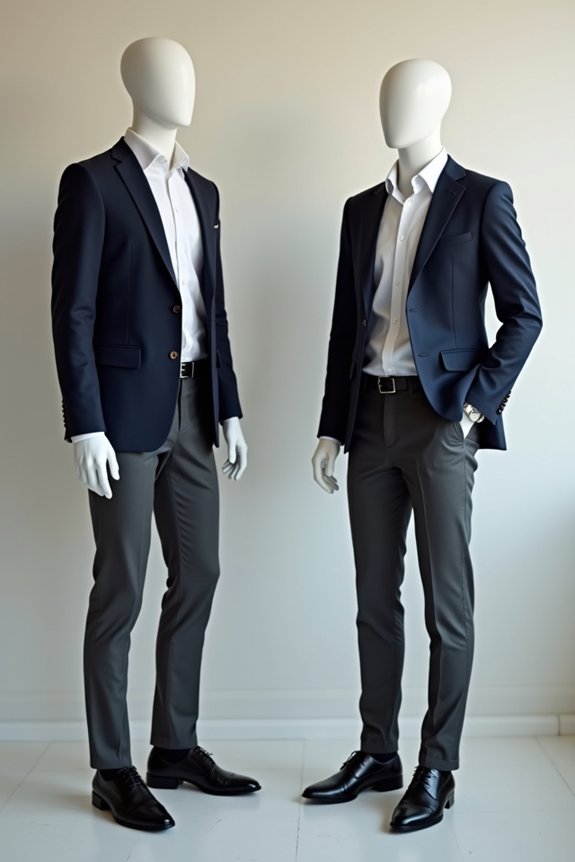
Your industry determines how formal you need to be, so match your outfit to what people actually wear there every day. Corporate roles demand classic tailored blazers with matching trousers or pencil skirts in navy, charcoal, or black paired with closed-toe pumps, while creative fields let you show more personality through a distinctive blouse or statement accessories while maintaining professionalism. Tech and startup companies fall somewhere in between, and high-waisted trousers with a tucked blouse and clean sneakers or loafers strike the right balance of polished yet approachable.
Corporate Formality Standards
When you’re picking out your interview outfit, the industry you’re applying to makes a significant difference in what counts as professional. Corporate jobs like banking, law, and insurance expect you to dress conservatively—think tailored blazers in navy or charcoal paired with matching trousers or pencil skirts that hit right at your knee, closed-toe pumps, and minimal accessories in neutral colors like black or white. This structured look signals you respect the organization’s values. Your professional attire should fit you perfectly, neither tight nor loose, because wrinkles and poor fit distract from your qualifications. Stick with solid fabrics rather than patterns, and keep jewelry understated. This isn’t about being boring; it’s about demonstrating you understand corporate culture and belong in that environment.
Creative Industry Flexibility
If you’re interviewing at a creative agency, design studio, or media company, the rules shift dramatically from what we just covered. You have outfit flexibility here, and that’s actually the point. The creative industry rewards personality alongside professional polish, so you can take more risks while staying polished.
Here’s what works:
- Pair a sleek midi dress with a fashion statement blouse that shows your style
- Wear tailored trousers with a statement top that reflects your creative taste
- Choose bold but controlled accessories—think interesting earrings or a quality scarf
- Opt for stylish footwear like patterned loafers or leather flats instead of basic pumps
- Layer with a blazer to ground your look without losing personality
Show them you understand design and aesthetics through your clothing choices. Your outfit becomes part of your creative portfolio.
Select Neutral Colors and Clean Lines to Keep Focus on Your Skills
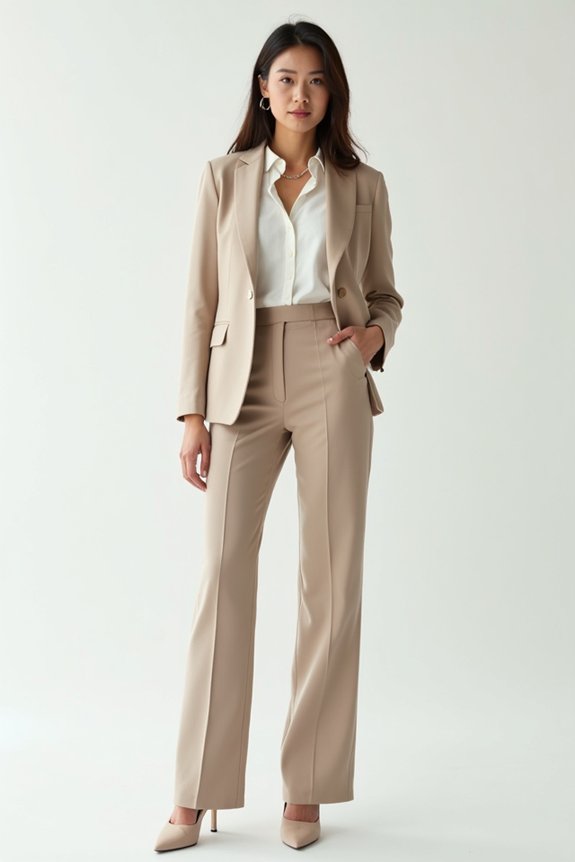
Why do neutral colors matter so much during an interview? When I wear black, navy, gray, or white, I’m removing visual distractions so my qualifications take center stage. Your professional attire should communicate competence, not compete for attention.
I’ve found that clean lines work well with neutral colors. A well-fitted blazer in charcoal paired with crisp white pants creates a solid foundation without demanding focus. Avoid busy patterns or bright hues that draw eyes away from your face and responses.
The strategy here is straightforward: let your skills shine. When you choose solid colors and simple silhouettes, interviewers concentrate on what you’re saying and your experience. Wrinkle-free fabrics in seasonally appropriate weights reinforce credibility through every detail.
Prioritize Fit Over Brand and Price Tag
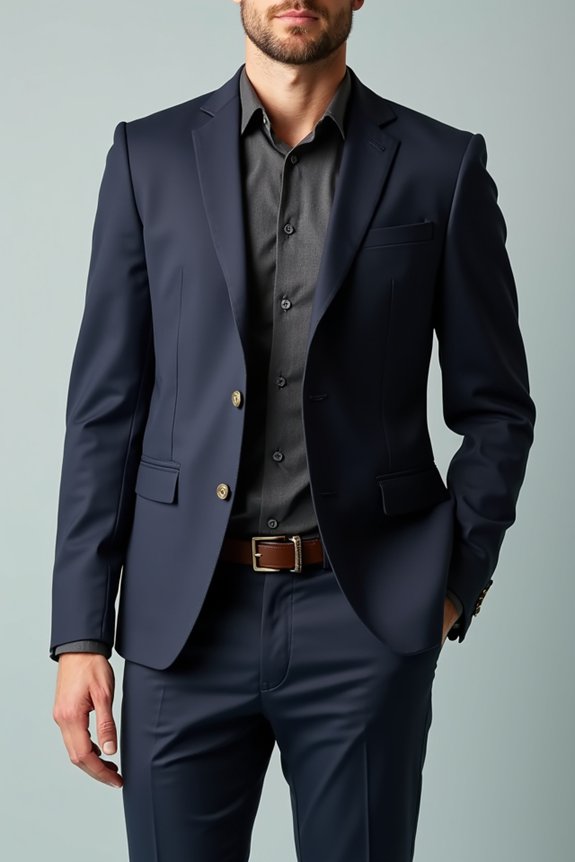
The fit of your clothes matters way more than the price tag or designer label, and I’ve learned this the hard way through plenty of interview prep. A well-fitted affordable blazer outperforms an expensive one that bunches at the shoulders, and tailoring improves your entire presence.
Here’s what I’ve discovered works:
- Invest in quality basics like a crisp dress shirt or blazer, then get them tailored for your exact measurements
- Skip expensive brands if they don’t fit your body; neutral colors in well-fitting pieces serve you better
- Prioritize tailoring costs over buying multiple ill-fitting items—it’s the smartest investment you’ll make
- Choose comfort so you move with ease without tugging or adjusting during your interview
- Test pieces beforehand to verify they’re clean, pressed, and allow you full mobility
Your interviewer notices fit before labels.
Perfect Your Grooming and Accessory Details
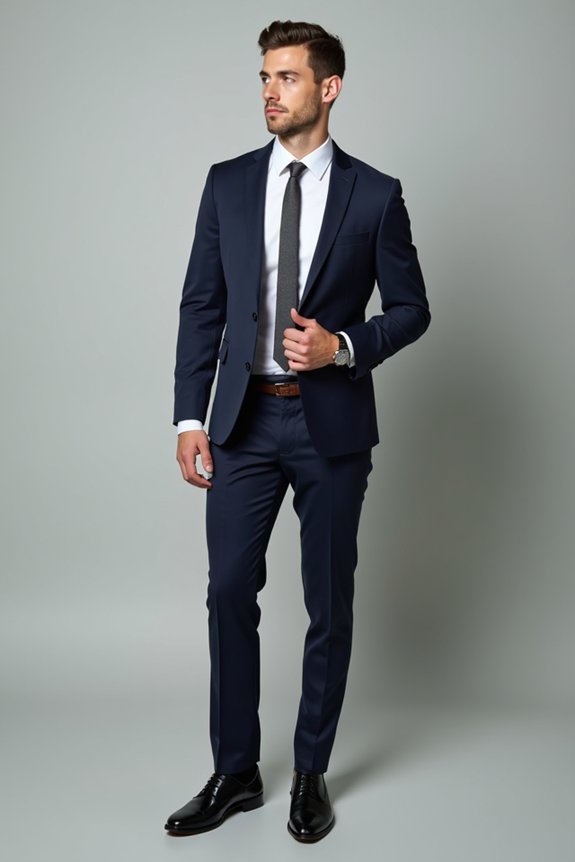
How much attention should you really give to the details beyond your outfit? I’ve learned that grooming and accessories matter significantly for your professional appearance. Keep your nails clean and filed, your hair neat and styled, and your makeup minimal—think natural, not dramatic. For accessories, I stick with gold or silver hoop earrings and layered necklaces that add refinement without overwhelming the look. They complement, not dominate. I coordinate everything with my neutral outfit palette: black, navy, gray, or white. This cohesive approach shows you’re composed and credible. Footwear deserves attention too—choose comfortable shoes that align with your outfit’s formality level. Finally, check for wrinkles and make sure your shoes are polished. These finishing touches signal you’re prepared for the role.
Interview Outfit Mistakes to Avoid in Your First 30 Seconds

You’ll want to skip the jeans, wrinkled button-ups, and sneakers because interviewers form opinions about your professionalism in those first 30 seconds, and casual pieces send the wrong signal. Loud patterns, neon colors, and flashy jewelry distract from what you’re actually saying, so stick with solid colors and minimal accessories—maybe just a simple watch or modest earrings. Your grooming matters too: make sure your clothes fit properly without bunching or sagging, your hair’s neat, and you’ve skipped the heavy cologne or perfume, since overwhelming scents can actually work against you before you even sit down.
Casual Clothing Red Flags
Within those first 30 seconds of walking through the door, your outfit speaks before you do, and I’ve learned that certain casual pieces can undermine everything you’re about to say.
I’ve seen firsthand how casual clothing red flags damage interview impressions before candidates even shake hands. Here’s what to skip:
- Denim of any kind, including dark or designer styles that blur professional boundaries
- Shorts or capris, which signal you didn’t take the meeting seriously enough
- Flip-flops or sandals, revealing too much casualness in footwear choices
- T-shirts or tank tops, which lack the formality interviewers expect
- Wrinkled or stained fabrics, suggesting carelessness about your appearance
Your interview impression hinges on avoiding these missteps. I’ve watched candidates lose opportunities because they treated the interview like a casual outing. Dress with intention, and you’ll notice the difference in how people respond to you.
Distracting Visual Elements
Once you’ve nailed the basics by ditching casual pieces, it’s time to think about what else might pull the interviewer’s attention away from your words, and I’ve noticed that bold patterns, loud colors, and flashy accessories create real problems in those critical first moments.
Your first impression depends on keeping distracting elements minimal. I learned this when wearing a patterned blazer—the interviewer’s eyes kept tracking the design instead of connecting with me. Skip busy prints, neon shades, and chunky statement jewelry that shift focus from your qualifications.
| What to Avoid | Why It Matters |
|---|---|
| Bold geometric patterns | Eyes get drawn to design, not you |
| Bright neons or metallics | Creates visual noise and distraction |
| Large dangling jewelry | Movements distract during speaking |
| Strong perfume | Sensory overload clouds professional attire |
Keep your professional attire clean, wrinkle-free, and understated so interviewers hear your expertise.
Grooming And Presentation
How you groom yourself in those first 30 seconds matters just as much as what you’re wearing, and I’ve learned this the hard way.
Your presentation sets the tone before you even speak. I’ve noticed that interviewers form opinions instantly, so I focus on these essentials:
- Clean, trimmed nails signal attention to detail and professionalism
- Tidy hair styled neatly keeps focus on your face and words
- Minimal or natural makeup conveys competence without distraction
- Light fragrance (or none) prevents overwhelming the room
- Wrinkle-free, well-fitted clothes eliminate visual noise
I skip strong colognes and perfumes because they linger and irritate. Instead, I guarantee my grooming communicates reliability. You’re expressing that you take this opportunity seriously through presentation choices, not just outfit selection. Small grooming details reveal how you value the interaction and respect the interviewer’s time.
Lay Out Your Outfit 2–3 Days Before for Confidence
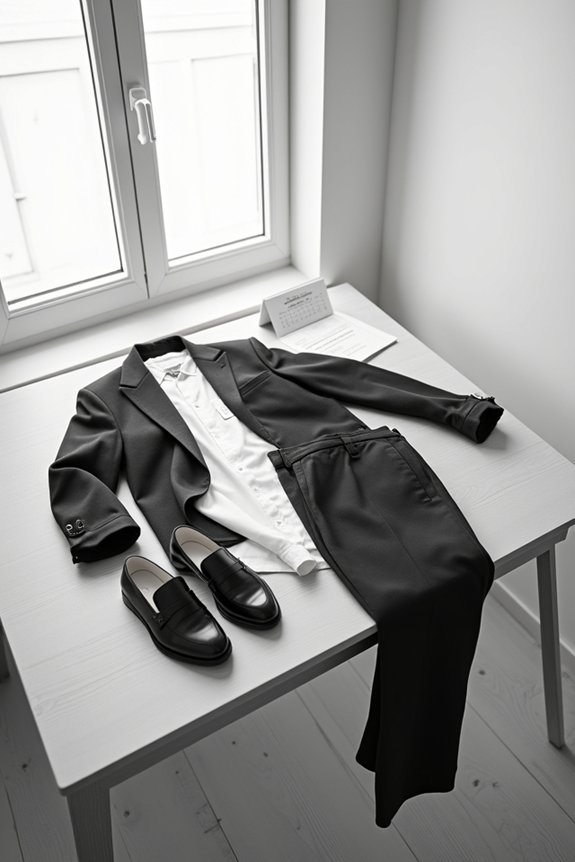
Because interview day brings enough stress without wardrobe surprises, I’d recommend laying out your complete interview outfit two to three days in advance. This pre-planning builds your confidence and eliminates last-minute scrambling.
When you lay out everything together, you’ll spot wrinkles, missing buttons, or fit issues before interview day arrives. I test each piece for comfort and movement—can you sit comfortably, or does your jacket pull? Do your shoes need breaking in?
Check that your accessories match. Neutral belts, shoes, and jewelry in black, navy, or gray create a refined look without distraction. For virtual interviews, rehearse your top on camera so you’ll know exactly how you appear to the hiring team.
This simple habit converts nervous energy into real confidence.